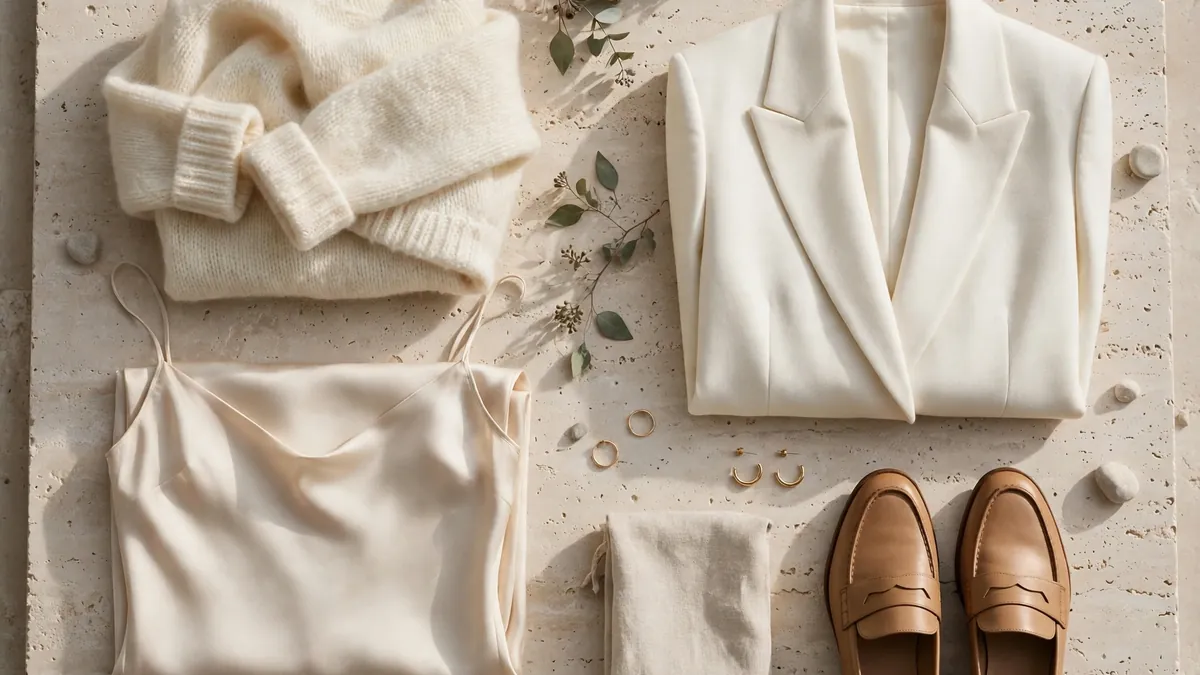
Quiet Luxury Australia: The Starter Kit Guide
Quiet luxury Australia is having a moment, and like most moments, it is being sold to you from every direction at once. The phrase turns up on swing tags, in ad copy and on racks of clothes that are neither quiet nor luxurious. Before spending a cent on it, pin down what the term means. Quiet luxury is not a trend you buy into. It is a way of choosing clothes: excellent fabric, a cut that fits, no visible branding, colours that sit calmly together. Nothing announces its price. The quality does that, quietly.
Australia is a natural home for it. The local version grew out of the same conditions that shaped Australian minimalism — strong sun, long summers, a working life that moves between office, beach and dinner without a costume change — but it sits a rung higher. Where minimalism is a style, quiet luxury is a standard. This guide is the starter kit.
Quiet Luxury Australia: What It Actually Is
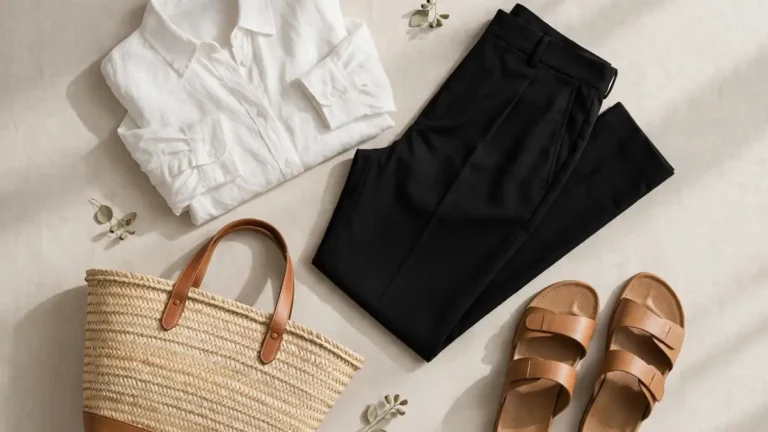
At its simplest, quiet luxury is clothing that is expensive to make and modest to look at. The money goes into the cloth, the construction and the fit — not into a logo, a print or a silhouette that dates by next season. A quiet luxury garment has a few recognisable traits: a fabric you can feel the quality of before you check the tag, seams and linings finished properly, a cut that holds its shape after a day of wear, and a colour drawn from a restrained palette. It is designed to be worn for years, not photographed once. In Australia it found a ready audience, because the local fashion identity already leaned that way: relaxed tailoring, natural fabrics, neutral colours. The Australian version is less formal — a linen-blend blazer over a silk camisole, good leather sandals, a structured tote.
Quiet Luxury vs Loud Logos
The most obvious difference is the logo, but it is not the only one. Loud luxury is built to be recognised at a distance: monogram canvas, oversized branding, hardware that catches the eye. The value is in the signal — other people are meant to know what it cost. Quiet luxury works in the opposite direction. The value is in the wearing. That difference changes how you shop. With loud luxury, the brand does the work. With quiet luxury, you do it yourself — reading labels, checking seams, trying things on. Logos date. A well-cut navy blazer in a good wool does not.
Quiet Luxury vs Plain Minimalism
If quiet luxury and minimalism look similar at first glance, that is because they share a palette and a distaste for clutter. The difference is in the standard applied. Minimalism is an aesthetic: clean lines, restrained colour, little decoration. Quiet luxury asks a further question — is the cotton good cotton, is the cut considered, will it still look right in three years? Minimalism is about looks. Quiet luxury is about making — and lasting. The two overlap — many labels in our minimalist fashion Australia guide appear here too — but the emphasis shifts. In minimalism, the win is a clean silhouette at a fair price. In quiet luxury, it is a fabric worth far more than the price, with no branding at all.
The Quiet Luxury Australia Starter Kit: Ten Pieces
You do not need a new wardrobe. You need ten pieces that work hard, in fabrics worth the money, in colours that match each other. Start here, and add slowly.
1. A cashmere crew-neck knit. The most recognisable piece, and the most often faked — soft without fluff, in ivory, camel or charcoal.
2. A silk slip dress. Bias-cut, mid-length, black, champagne or deep navy. Dinner, weddings, a smart lunch, layered under a knit in winter.
3. A tailored blazer. Unstructured or half-lined, ivory or navy fine wool, clean shoulder, lapel lying flat.
4. A white shirt, properly cut. A relaxed button-down in cotton poplin or a cotton-silk blend, collar standing on its own, surviving a hundred washes.
5. Fine merino trousers. Flat-front, straight-leg, black or charcoal. Merino drapes better than cotton twill and holds a crease without looking formal.
6. A silk camisole. Ivory or black, adjustable straps, straight hem. Under the blazer, under the knit, or on its own in summer.
7. A leather tote or structured shoulder bag. Smooth, full-grain leather, tan or black, minimal hardware, no visible logo.
8. Leather loafers. Tan or black, low profile, leather sole or slim rubber one. They do the work of a heel without announcing it.
9. A fine merino or cashmere-blend scarf. Camel or grey. The cheapest way into the look, and the easiest test of luxury fibres.
10. One simple gold or silver piece. A chain, studs or a bangle — small, well-made, worn every day. Nothing oversized, nothing that rattles.
Notice what is not on the list: no statement coat, no trend piece, no second bag. If a piece does not pair with at least three others here, it does not belong yet. Our Australian capsule wardrobe guide works from the same logic.
Fabrics That Earn the Price
Quiet luxury lives or dies on fabric. The cut can be perfect and the colour exactly right, but if the cloth is thin or mostly synthetic, the piece will not survive the season.
Cashmere
Cashmere is the fabric people picture when they hear the phrase, and the most counterfeited in spirit: plenty of knits labelled with the word are blended down to a whisper of the fibre. Real cashmere feels soft without a halo of fuzz and keeps its shape rather than sagging at the elbows. Check the composition label first, then the weight. It needs gentle handling: cold wash or dry clean, folded never hung.
Silk
Silk is the quiet luxury workhorse: slip dresses, camisoles, blouses, scarves. Good silk feels cool to the touch, drapes in soft folds rather than stiff ones, and has a low, even sheen rather than a high shine. Real silk has depth; polyester satin looks flat. The composition label matters most here: “silk” on a swing tag is not the same as 100% silk in the composition. It needs gentle care, but it repays it.
Fine Merino
Fine merino is Australia’s home-ground advantage. The country grows some of the world’s best merino wool. Fine merino is warm without bulk, resists odour far better than cotton, and drapes beautifully in trousers and skirts. Feel for softness without scratch — superfine merino should not itch — and check the weight: a good merino knit is light but not flimsy. It is the most practical of the four fabrics here.
Leather
Leather is where quiet luxury is most visible and most often faked, because a bag or shoe carries no composition label in the same way. Full-grain leather is the standard: the top layer of the hide, with its natural grain intact. It feels smooth, develops a patina, and smells like leather. Check the edges and stitching: finished, sealed, even and straight. Corrected-grain or bonded leather looks tired by month six; full-grain looks better. That ageing is the point.
The Colour Palette
Quiet luxury has a palette, and it is narrow on purpose: ivory, black, navy, camel, charcoal, stone and grey, with maybe one soft accent — olive, or a muted blue — in a single piece. The reason is practical, not snobbish. When every piece sits in the same tonal family, everything matches, and a ten-piece kit behaves like a thirty-piece wardrobe. Within that narrow range, there is still room for personality. Camel warms up pale skin; charcoal flatters almost everyone; ivory reads fresher than white in Australian light. The palette also makes quality visible: in ivory silk or a camel knit, a cheap fabric has nothing to hide behind.
The Australian Labels That Do It Best
Several Australian labels have been making quiet, beautifully cut clothes for decades, long before the phrase existed — and they sell here without import markups. The quiet luxury Australia scene is small enough to learn by name. For a fuller survey, our guide to the best Australian fashion brands for women covers the wider field.
Scanlan Theodore
If one Australian label defines quiet luxury, it is Scanlan Theodore. Founded in Melbourne in 1987, the house built its name on architectural tailoring, sculptural silhouettes and a signature crepe knit, made with patience and almost no noise. Considered, not cheap: a crepe-knit dress that holds its shape all day, a jacket that needs no adjusting. If you buy one investment piece, start here.
St Agni, Matteau and Anna Quan
These three cover the modern minimalist end of the look. St Agni, from Byron Bay, is the relaxed polish of the group — deconstructed tailoring, silk slip dresses and oversized button-downs in a neutral palette. Matteau, which began in swimwear, brings clean sculptural shapes that hold up season after season. Anna Quan, the Sydney tailor of the three, is the sharpest: shirting-inspired pieces and refined suiting, the workwear pick.
Camilla & Marc, Viktoria & Woods and Bassike
Camilla & Marc, founded in Sydney in 2003, is the suiting authority here — column dresses, sharp tailoring and knitwear in black, ivory and neutral tones. Viktoria & Woods, founded in Melbourne in 2004, grew out of fine merino knitwear; its tailoring and denim share the same pared-back discipline. Bassike, founded in Sydney in 2006, anchors the accessible end: its organic cotton jersey is the everyday base layer.
How to Spot Genuine Quality vs Expensive Basics
A high price and a neutral colour do not make something quiet luxury. Here is what to check before you pay.
Read the composition label before anything else. It is the one piece of honest information on the garment. A “cashmere-feel” knit that is mostly acrylic is not cashmere at any price. If the composition does not match the price, walk away. Turn it inside out too: seams even and finished, linings attached properly.
Feel the weight and the hand, then try it on and move in it. A good knit has substance; a good trouser drapes rather than clinging. Then sit down, raise your arms, walk. A well-cut garment keeps its shape; a badly cut one pulls at the buttons or bags at the knee. Order one piece from a new label first and wear it properly before buying more.
Look at the label’s core shapes across seasons. A genuine quiet luxury label keeps its hero pieces and refines them; a label that reinvents its whole range every season is selling novelty, not longevity. On cost per wear, a well-made piece worn a hundred times costs less per wear than a cheap one worn ten times — but only if you actually wear it that often.
Where to Shop and What to Budget
Start with the labels’ own websites: full size ranges, complete collections, and the best sense of how a brand fits. THE ICONIC, David Jones and Myer stock many of these Australian labels and are useful for comparing fits across brands in one order. The Broadsheet guide to Australian clothing brands is a solid starting point for a broader survey.
On budget, expect three tiers. Bassike and the better basics sit at the accessible end. St Agni, Matteau, Anna Quan and Viktoria & Woods sit in the middle, where the fabrics and construction step up. Scanlan Theodore and Camilla & Marc sit at the top.
That is quiet luxury Australia at its best — pick a palette, invest in the pieces you wear most, and let the rest go.
FAQs
What is quiet luxury?
Quiet luxury is a style built on excellent fabrics, precise tailoring and no visible branding. The money goes into the cloth, the construction and the fit rather than a logo or a trend silhouette, so the clothes look understated and last for years.
Is quiet luxury the same as minimalism?
No, though they overlap. Minimalism is an aesthetic — clean lines, restrained colour, little decoration. Quiet luxury adds a quality standard to that aesthetic: the fabric, the finishing and the longevity have to be exceptional too.
How much does a quiet luxury starter kit cost in Australia?
There is no fixed figure, because the kit can be built at different tiers — accessible basics from labels like Bassike, mid-tier pieces from St Agni or Viktoria & Woods, or investment pieces from Scanlan Theodore. Judge it by cost per wear: a well-made piece worn a hundred times usually works out cheaper than a cheap piece worn ten times.
Which Australian brands are best for quiet luxury?
Scanlan Theodore is the defining Australian quiet luxury label, founded in Melbourne in 1987 and known for architectural tailoring and crepe knit. St Agni, Matteau, Anna Quan, Camilla & Marc and Viktoria & Woods are the other names to know, with Bassike at the accessible end.
How can I tell real quiet luxury from expensive basics?
Read the composition label first — a knit that is mostly acrylic is not cashmere at any price. Then check the seams and lining, feel the weight of the fabric, try the piece on, and see whether the label keeps its core shapes across seasons.