
Autumn Capsule Wardrobe Australia: 12 Pieces That Work
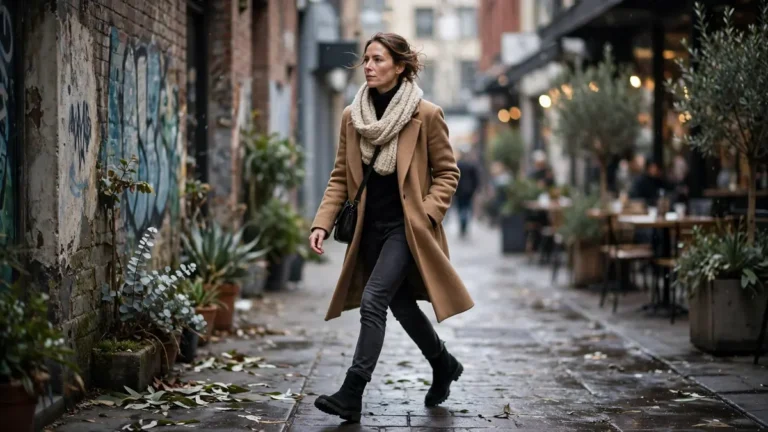
Autumn in Australia does not arrive all at once. One March morning Melbourne reaches for a jumper while Brisbane is still in a tee; by May, Canberra mornings are properly cold while Sydney stays mild and sunny. An autumn capsule wardrobe Australia can actually live in has to handle that spread — not a northern-hemisphere autumn, but warm days, cool mornings and the odd rainy week.
This is a twelve-piece edit, not a system. If you want the year-round version, with piece counts and seasonal swaps, it is covered in our Australian capsule wardrobe guide. What follows is only the autumn dozen: twelve pieces, why each earns its place between March and May, and the five outfits they make.
Why Autumn Is the Hardest Season to Dress For in Australia
The problem with autumn here is not the cold. It is the range. Sydney stays mild deep into May: days warm enough for a shirt alone. Melbourne does its four-seasons-in-a-day routine right through autumn: a morning that feels like winter can turn warm by lunch. Brisbane barely notices the change until late May; Canberra and Hobart get frosty mornings early. That spread is exactly what an autumn capsule wardrobe Australia has to solve for.
So the twelve pieces below are chosen for weight and versatility first. A heavy winter coat fails the first test — you will roast in it by midday — and a summer linen shirt fails it too, crumpling under a knit and offering nothing against a cold wind. Autumn belongs to the middleweights: merino, cotton-poplin, wool blends, gabardine, corduroy.
The 12 Pieces of Your Autumn Capsule Wardrobe Australia
Each piece below earns its place by doing more than one job. Building from scratch, buy the knit, jeans and boots first, then the layers, then the rest.
1. The lightweight merino crew-neck knit
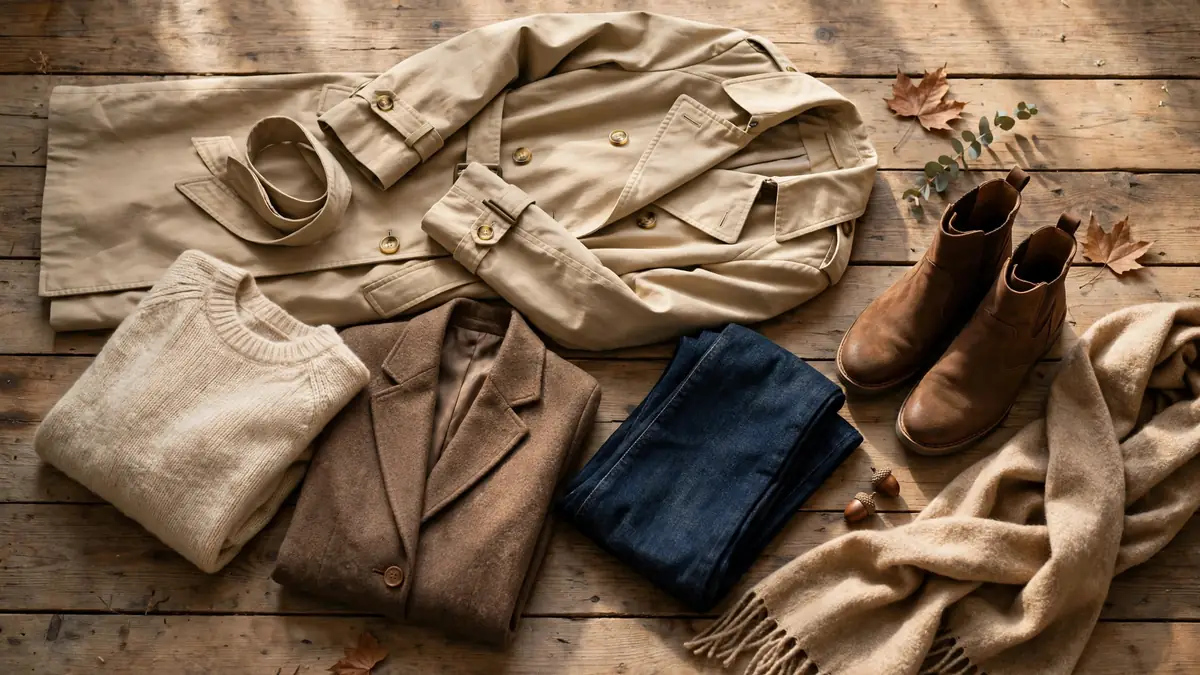
This is the piece the whole capsule hangs on. A lightweight merino crew-neck is warm enough for a cold morning alone and thin enough to sit under a blazer or trench. Merino regulates temperature better than cotton knitwear and resists odour between washes. Choose navy, charcoal or oatmeal, wash it cold, and it will last several autumns.
2. The unstructured wool-blend blazer
A structured blazer belongs to the office; an unstructured one belongs to autumn. Without shoulder padding or a stiff canvas, a wool-blend blazer drapes like a cardigan and layers like a jacket. Wear it over the shirt for work, the fine tee on a weekend, or under the trench on a cold morning. Black or navy keeps it useful; a half-lined blazer breathes better on a warm afternoon.
3. The white cotton-poplin shirt
The white shirt is the hardest-working piece in any wardrobe. In cotton-poplin it holds its shape under a knit, tucks cleanly into trousers, and layers under the blazer. Wear it open over the fine tee as a light jacket on a mild day, or buttoned up with the collar out over the knit when the morning is cold. Buy it slightly relaxed, with room for a tee underneath.
4. The dark straight-leg jean
Dark, straight-leg, no distressing, no fading: the autumn jean is the plain one. It works with the knit and boots for weekends, the blazer and loafers for smart-casual days, and under the trench when the weather turns. Straight-leg suits the season best: it sits neatly over an ankle boot and balances a knit or trench. Wash it rarely and always cold — the colour is what makes it look smart.
5. The black tailored trouser
Every capsule needs trousers that make an outfit look finished without effort: black, tailored, with a little stretch. The stretch lets you sit through a workday and layer a knit over the top without the waistband digging in. Pair them with the shirt and blazer for the office, or the knit and loafers for dinner. A tapered or straight leg works; wide-leg fights with the ankle boot.
6. The midi shirt dress
The midi shirt dress is the one-and-done piece. In a heavier cotton, Tencel twill or cotton-modal blend, it works alone on a warm Brisbane afternoon, with the blazer over it for work, or with the knit layered on top when the temperature drops. Belt it or leave it loose, add boots or loafers, and it is done. Choose a solid colour — navy, olive or deep rust — so it pairs with everything else.
7. The water-resistant trench coat
Autumn rain here is rarely a downpour; it is the steady drizzle that soaks a wool coat and leaves an umbrella useless in the wind. A trench in water-resistant cotton gabardine is built for exactly that weather. Wear it open over the blazer on mild days, belted over the knit when it is cold. Check the care label: a trench needing dry-cleaning after every rainy week will live unworn.
8. The leather ankle boot
If the knit is the piece this capsule hangs on, the ankle boot is the piece it walks in. A leather ankle boot with a low, walkable heel handles wet pavements, cold mornings and long days on your feet. Black is safe; dark tan is more interesting, and warms up the whole palette. Look for a heel you can walk in, a grippy sole, and leather that polishes back to life. Suede suffers in the rain, so make it smooth leather.
9. The leather loafer
The loafer is the autumn shoe for days too warm for boots and too cool for sandals. A leather loafer works with the tailored trouser for work, the jeans for weekends, and the corduroy skirt. Choose a small heel or chunky sole over a flat ballet shape: you want grip and height off wet ground. Break them in first — a blister on the first wear will put you off a good pair.
10. The fine long-sleeve tee
A fine long-sleeve tee in merino or cotton-modal is the base layer that makes Melbourne’s four-seasons days survivable: under the shirt, under the knit, or on its own when the afternoon warms up. It also lets you wear the dress and skirt on cooler days. Buy it in your knit’s colour family — white, black or navy — so it disappears under layers. One is enough if you wash it often.
11. The corduroy midi skirt
Corduroy says autumn more clearly than any other fabric, and a midi skirt is where it works best. A corduroy midi in a fine wale — not the chunky seventies kind — pairs with the fine tee and loafers for a warm day, the knit and boots when it cools down, and the shirt tucked in for work. Midi hits just below the knee, so it layers over tights if a Canberra morning demands them.
12. The wool-silk scarf
The smallest piece on the list does the most per gram. A wool-silk scarf takes the edge off a cold morning, adds colour to a neutral outfit, and folds small enough to live in your bag. Silk in the blend keeps it from itching at the neck. Choose a colour you love — deep rust, forest green or burgundy — because this piece carries the capsule’s personality. On a warm afternoon it comes off; on a cold Hobart morning it stays on.
Five Outfit Formulas from the Twelve
Twelve pieces, five outfits. Each formula in this autumn capsule wardrobe Australia edit uses only pieces from the list.
- The office day: white shirt, black trouser, unstructured blazer, leather loafer. Add the trench if the morning is wet, the scarf if the office runs cold.
- The weekend: merino knit, dark straight-leg jean, leather ankle boot, wool-silk scarf. For farmers’ markets, long lunches and walking.
- The Melbourne four-seasons day: fine tee under the white shirt, merino knit on top, jeans, ankle boots, trench over your arm until you need it.
- The dinner or lunch out: midi shirt dress with the blazer and loafers, or the knit over the dress with boots if the evening is cool. The scarf adds colour if the dress is plain.
- The warm Brisbane afternoon: fine tee, corduroy midi skirt, leather loafers. The trench and scarf stay home; the knit goes in the bag in case the evening cools down.
Layering for a Four-Seasons-in-a-Day
Melbourne is the city this section is for, but the method works anywhere the weather changes its mind: thin layers, in the order you will take them off. The fine tee goes closest to the skin, then the shirt, then the knit, then the trench. Each layer should be thin enough that removing one changes how warm you feel, and loose enough that the next sits flat.
The mistakes are all versions of the same thing: layers too similar in weight, so taking one off changes nothing, or a bulky knit under a fitted blazer. If you can raise your arms comfortably with every layer on, the outfit works. If not, take the bulkiest layer off and carry it — the trench over your arm and the scarf in your bag are layers too.
Keep the scarf and trench where you can reach them: a layer left at home is not a layer. The capsule works because the warm pieces travel with you.
Autumn Fabrics Worth Reaching For
Autumn fabrics are middleweights: the test is whether they handle a cool morning and a warm afternoon. Merino leads: warm without bulk, breathable when the day heats up, and forgiving about odour. Cotton-poplin and cotton twill do the structured work — shirts, dresses, trousers — holding their shape under layers. Wool blends give blazers their drape without the weight of suiting wool, and cotton gabardine suits a trench because it shrugs off drizzle.
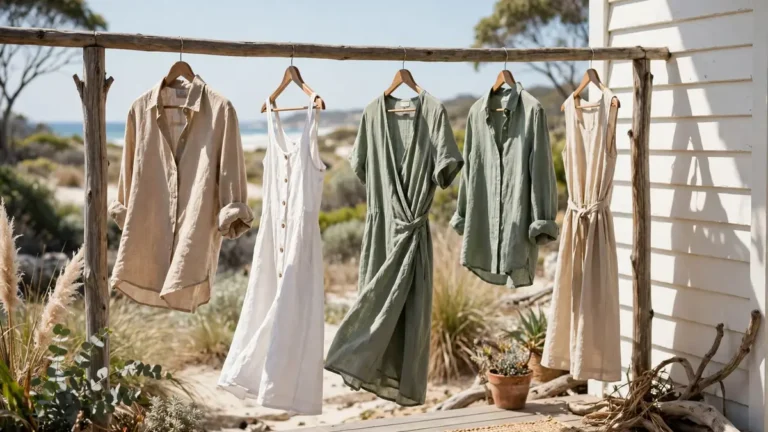
Corduroy and leather are the texture of the season: corduroy for skirts, leather for shoes that can take rain. What to skip is just as clear: heavy wool is a winter fabric, and you will roast in it until June. Linen, the hero of summer, crumples under a knit and gives nothing against a cold wind. Thin synthetics feel clammy when the temperature swings.
What to Leave Out of an Autumn Capsule
The fastest way to wreck an autumn capsule is buying for the wrong season. The heavy winter coat is the classic mistake — it looks right in the shop in March, and eats the budget that should have gone to the trench and knit. Summer sandals and shorts are the other end of the same error: one or two more wears in Brisbane, but they take up space.
Leave out the single-outfit showpiece too. A statement piece that only works one way — a printed blouse that matches nothing else, a skirt in a colour that fights with your knit — breaks the rule every other piece follows. The whole edit leans on the same quiet approach as our minimalist fashion guide. For a broader survey of the Australian labels behind these pieces, the Urban List guide to Australian fashion labels covers most of the names worth knowing. When May turns properly cold, your autumn capsule wardrobe Australia hands over to winter — that moment, and the heavier coat, is covered in our Australian winter fashion essentials.
FAQs
What should I wear in autumn in Australia?
Layers you can add and remove: a fine tee under a shirt, a lightweight merino knit, and a water-resistant trench on top. Sydney stays mild into May, Melbourne swings between seasons, Brisbane stays warm until late May, and Canberra and Hobart get cold mornings early.
How many pieces do I need for an autumn capsule wardrobe in Australia?
An autumn capsule wardrobe Australia can run on twelve pieces: a merino knit, a wool-blend blazer, a white poplin shirt, dark jeans, black tailored trousers, a midi shirt dress, a trench coat, ankle boots, loafers, a fine long-sleeve tee, a corduroy midi skirt and a wool-silk scarf. Each piece works with at least three others.
Is a trench coat warm enough for autumn in Melbourne?
Yes, with a knit underneath. A water-resistant trench over a merino knit and a shirt handles a Melbourne autumn day, including the rain. For the coldest mornings in Canberra and Hobart, add the scarf and fine tee as a base layer; the trench is an autumn coat, not a winter one, and hands over to heavier outerwear in June.
What colours work best for an autumn capsule?
Start with the neutrals you already wear — black, navy, stone and white — then let one or two deeper autumn tones do the personality work: rust, olive, forest green or burgundy. Everything still has to work together, so a rust scarf should sit happily with a navy knit and black trousers.
When should I start wearing my autumn capsule?
Melbourne, Canberra and Hobart can start in March. Sydney usually joins in April, and Brisbane often not until May. Switch piece by piece: bring the knit and the trench out first, keep the summer pieces until you stop reaching for them, and retire them when the capsule covers a full week without gaps.