
Midi Dresses Australia Summer: Beach-to-Dinner Guide
There is a reason midi dresses Australia summer is the search that returns every December. The midi — hem falling between the knee and the ankle — is the one dress length that handles an Australian summer properly. It covers enough for strong sun and for sitting on a beach towel, A good midi takes you from the sand to a restaurant table without a second thought.
This is not a trend piece. The midi has been the default summer dress length in Australia for years, because it suits the climate and the way people actually live: mornings at the beach, long lunches, dinners that start late and run warm. This guide to midi dresses Australia summer covers the four cuts that work hardest, the fabrics that cope with heat and humidity, how to get the length right, and the small styling shifts that turn one dress into two outfits.
Why the Midi Works in an Australian Summer
The midi hits a practical sweet spot that shorter and longer dresses miss. A mini leaves too much skin exposed to strong sun and to the sticky vinyl of a beachside cafe chair; a maxi drags on sand, catches on decking and gathers heat around the ankles. A midi hem, sitting at mid-calf, stays clear of the ground, catches the breeze, and still gives real coverage.
It is also forgiving in a way that matters when you buy online. A midi does not need to land on an exact point the way a mini does, and it does not need the precise floor-skimming measurement of a maxi. Anywhere from just below the knee to just above the ankle reads as a midi, so the fit window is wide.
Midi Dresses Australia Summer: The Four Cuts That Work
Not every midi is equal. Four cuts do the heavy lifting in an Australian summer, and each one suits a different kind of day.
The Shirt Midi
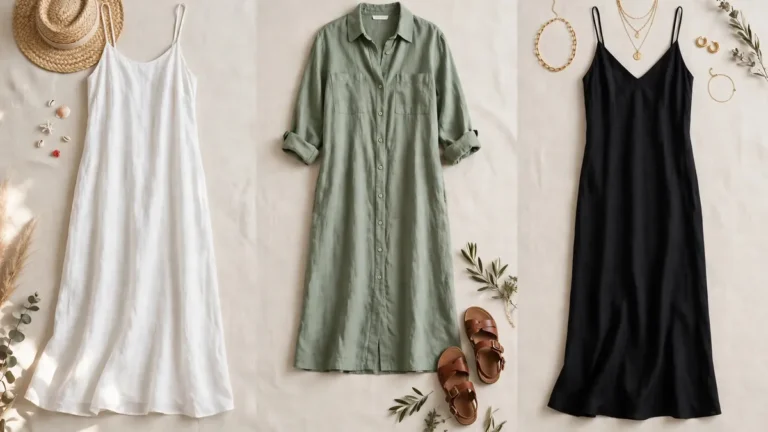
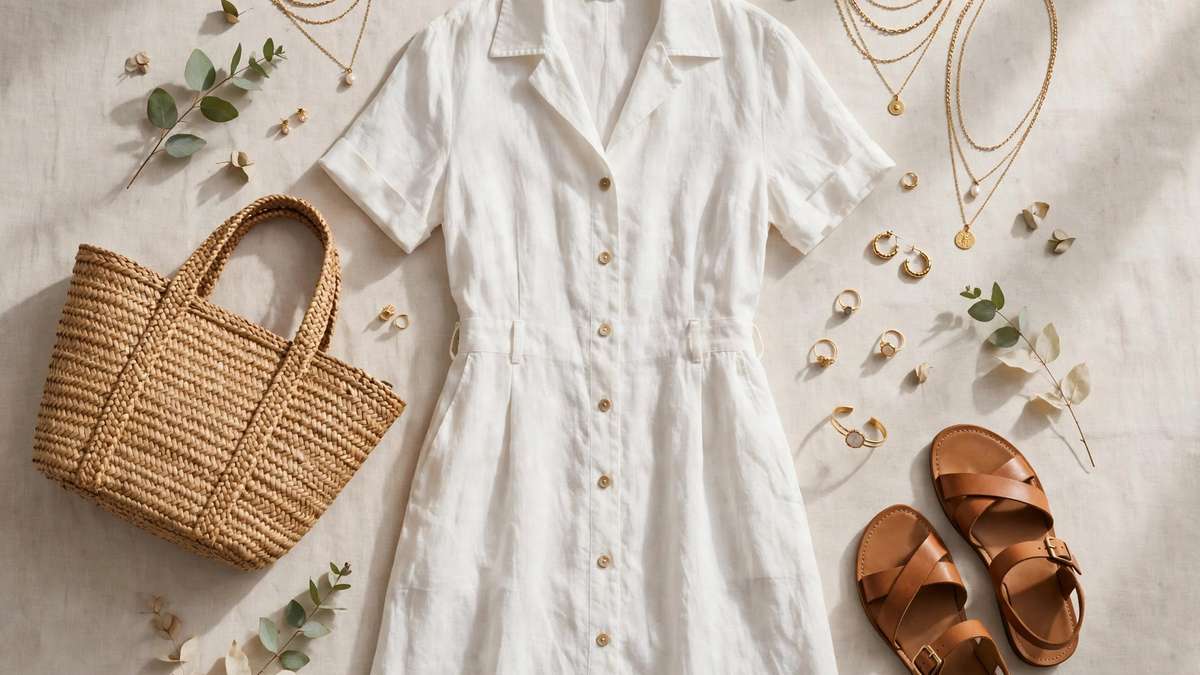
The shirt midi is the most useful of the four: a button-front dress with a collar, usually in linen or cotton, with a waist you can define with the tie belt or leave loose. It crosses from beach to dinner more convincingly than any other cut — open over swimwear in the morning, buttoned and belted with sandals for lunch, then with a heel and jewellery in the evening. DISSH, the Brisbane label, does this cut particularly well in linen.
The Slip Midi
The slip midi is the simplest dress you will own: a bias-cut, spaghetti-strap or straight-neck dress that skims the body and moves with it. The trick is the cut — a bias cut drapes rather than clings, which is what you want in humidity, St Agni built much of its reputation on the slip dress, and its versions remain the benchmark: clean, unfussy, and cut to be worn rather than posed in.
The Tiered Midi
The tiered midi is the relaxed one: gathered tiers falling from the bodice or waist, plenty of volume, nothing fitted. It is the most forgiving cut and the most comfortable on a humid afternoon. The risk is volume without shape — a tiered dress with no waist definition at all can swallow a frame. The good ones have a defined bodice, a smocked waist, or a tie that gives the tiers somewhere to fall from. Faithfull the Brand is the label most associated with this shape; its tiered linen midis, such as the Marais Midi Dress at THE ICONIC, pair a fitted bodice with a full tiered skirt.
The Wrap Midi
The wrap midi is the most adjustable dress in this list, which is why it lasts in a wardrobe. A true wrap ties at the waist and can be loosened or tightened to fit; a faux wrap keeps the look with a fixed waist. Check the wrap point when you try one on: it should sit at your natural waist, with enough overlap that it never threatens to open when you sit.
Fabrics That Handle the Heat
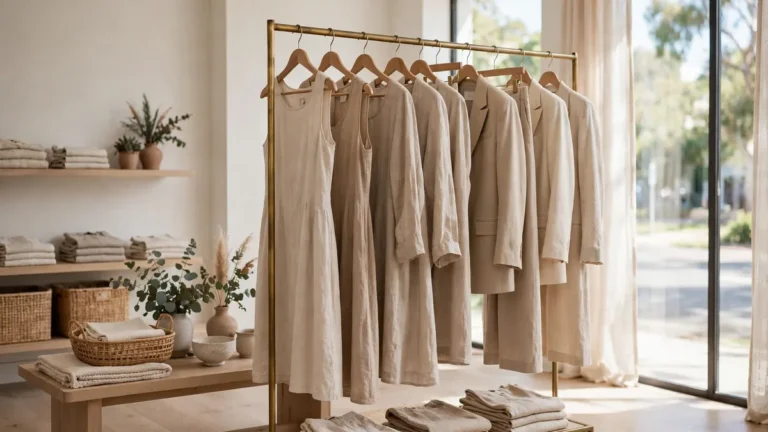
The cut matters, but the fabric decides whether a midi is wearable on a 34-degree day or just photogenic. Linen is first. It breathes, absorbs moisture without feeling wet, and dries fast. It wrinkles — that is the fabric, not a flaw — and a good mid-weight linen drapes rather than crumpling into tissue. Most of the best midi dresses Australia summer shoppers buy are linen or linen-dominant blends, and for good reason: linen is the fabric the climate asks for.
Cotton comes second, and it is the workhorse. A good cotton poplin shirt midi holds its shape through a long day and irons back to crisp; a cotton voile tiered midi is light enough for the most humid afternoon. Check the composition label before buying, though: a dress described as “linen-look” or “cotton-feel” that is mostly polyester will not breathe like the real thing. Tencel, also sold as lyocell, is the quiet achiever — it drapes like silk, breathes well and resists wrinkling better than linen, a good choice for slip and wrap midis.
Length and Hemlines: Getting the Fit Right
Midi is a range, not a point, and where the hem falls on you depends on your height. On a taller frame, a midi meant to hit mid-calf can land just below the knee; on a shorter frame, the same dress can read as a maxi. The most flattering spot for most people is mid-calf, just above the widest part of the calf, with the hem level rather than angled.
Hem shape matters as much as hem height. A straight hem is the most versatile and the easiest to style with both flats and heels. An asymmetric or handkerchief hem adds movement and suits the beach, but it can look unfinished with a heel at dinner. A tiered hem adds volume at the bottom, which balances a fitted bodice but can overwhelm a shorter frame if the tiers are too deep.
Beach to Dinner: The Styling Shift
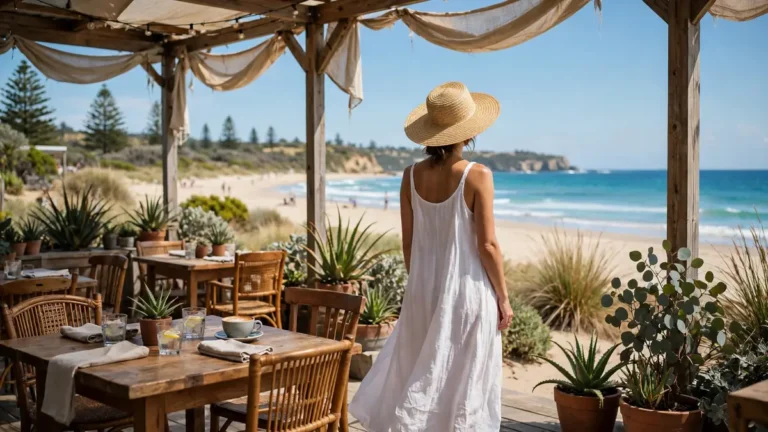
The whole point of a midi in an Australian summer is that one dress does two jobs, and the shift is small — mostly shoes, bag and jewellery. Start at the beach: flat leather sandals or slides, a woven straw tote, sunglasses, hair up or tied back, no jewellery beyond a simple pair of earrings. A linen shirt midi worn open over swimwear, or a tiered midi with sandals, is the morning uniform.
Dinner is where the shift happens. Heeled sandals or a block heel — a block heel is the practical choice on grass, decking or uneven paving — a clutch or a small shoulder bag instead of the tote, and jewellery: a gold cuff, a pair of drop earrings, a necklace that sits in the neckline of a wrap or slip midi. The dress has not changed; the context has.
Where to Find Them: Labels Worth Knowing
Australian labels do the summer midi better than most, because they design for this climate rather than adapting a northern-hemisphere collection. At the accessible end, DISSH is the first stop. The Brisbane label builds its summer collections around linen midis — shirt, wrap, tiered and slip — in plain colours and prints. As a guide, its Rosemary White Linen Midi Dress was listed at $199.99 AUD on dissh.com.au, but always check the brand’s own site for current pricing, as collections change.
In the mid-range, Faithfull the Brand is the tiered-midi specialist, with linen dresses that have become a signature of Australian summer dressing; its styles are stocked by THE ICONIC and David Jones, which makes comparing fits straightforward. Bec + Bridge and Aje sit in the same bracket and do the dressier end well — wrap and slip shapes in crepe and silk blends that carry an evening, and prints that suit a wedding guest or a long lunch. At the designer end, St Agni and Matteau are the minimalist choices, while Spell & the Gypsy Collective and Tigerlily cover the bohemian end. Wherever you shop, the rule from our Australian summer fashion guide still holds: buy the better version of the thing you wear most, and check the fabric composition before you check the price tag.
Occasions: Day, Brunch, Dinner, Wedding Guest
Daytime is the midi’s home ground. A tiered linen midi with flat sandals is the default for a hot Saturday: market, beach, errands, all without a change. A shirt midi does the same job with a little more structure, which suits a working lunch. Keep colours light — white, stone, soft blue, pale print — because dark colours absorb heat and show sweat, and because light colours are what summer dressing is for.
Brunch is where the midi earns its keep as a social dress. A wrap midi in a print, or a tiered midi in a soft colour, with a woven bag and flat sandals, is dressed enough for a long table and comfortable enough to sit at it for two hours. This is the occasion where the tiered cut shines: it moves when you do, it does not crease across the lap when you sit, and it photographs well without trying.
As a wedding guest, the midi is the safe and stylish choice for most Australian summer weddings: long enough for a garden ceremony, short enough for dancing, and it leaves room for a heel. Choose the fabric for the formality — crepe or silk for evening, linen for a daytime garden wedding — and keep the colour away from white and ivory. Our Australian wedding guest outfits guide covers the dress-code details, including what to avoid at a summer ceremony.
What to Avoid
A few traps are worth naming, because they are the reason a midi ends up unworn at the back of a wardrobe. First, the wrong fabric: a midi in a heavy polyester blend will not breathe, and no amount of good cutting fixes that. If the composition label is mostly synthetic and the dress is meant for summer, put it back.
Second, a wrap that does not stay wrapped, a slip that needs constant adjusting, or a tiered dress with so much volume it wears you rather than the other way around. These are fit failures, not style failures, and they are the reason to try a dress on properly — sit in it, walk in it, reach for something on a high shelf — before you decide. A midi should be the easiest dress you own, not the one you are always tugging at.
A good midi dress is the closest thing Australian summer dressing has to a uniform — and that is the promise of midi dresses Australia summer: one length, four cuts, fabrics that breathe, and a styling shift small enough to happen in a restaurant bathroom. Pick the cut that suits your days and buy it in real linen or cotton. For the wider warm-weather wardrobe around it, our Australian resort wear guide covers the pieces that pair with a midi on a beach holiday.
FAQs
What length is a midi dress?
A midi dress falls between the knee and the ankle, usually ending at mid-calf. The most flattering spot for most people is just above the widest part of the calf, with a level hem. Because midi is a range rather than an exact point, the fit window is wider than for a mini or a maxi, which makes buying online easier.
Can you wear a midi dress to the beach?
Yes — the midi is one of the best beach-to-dinner dresses for an Australian summer. A linen shirt midi worn open over swimwear, or a tiered midi with flat sandals, works at the beach in the morning and, with a shoe and bag change, at dinner in the evening. Choose linen or cotton so the fabric breathes, and avoid silk for the beach itself.
What shoes go with a midi dress in summer?
Flat leather sandals or slides for daytime and the beach, and a heeled sandal or block heel for dinner. A block heel is the practical choice on grass, decking or uneven paving. Avoid very chunky trainers with a dressy midi, and avoid a stiletto on sand or grass — the heel sinks and the outfit falls apart.
Are midi dresses flattering for petite women?
Yes, with the right length. A midi that ends at the slimmest part of the lower leg, just above the calf, lengthens the leg rather than cutting it. Avoid midis that land at the widest part of the calf, and avoid very deep tiers that add volume at the hem. A wrap or shirt midi with a defined waist is usually the most flattering cut for a shorter frame.
What fabric is best for a midi dress in Australian summer?
Linen is the best all-round choice: it breathes, absorbs moisture and dries fast. A linen-cotton blend keeps the breathability with less wrinkling. Cotton poplin suits structured shirt midis, Tencel suits fluid slip and wrap midis, and silk is best saved for evening. Avoid mostly-polyester blends in summer — they trap heat and will not breathe like linen or cotton.