
Coastal Grandmother Style Australia: Elevated Ease
Coastal grandmother style Australia is the look of a long lunch that drifts into the afternoon: white linen, navy stripes, relaxed tailoring and nothing trying too hard. It takes its name from the polished, sunlit world of Nancy Meyers films, and the phrase took off online in 2022. In Australia it has lasted because the climate suits it: a linen shirt and good trousers can carry you from a Byron Bay morning to a Sydney dinner.
Plainly put, it is not dressing old, and it is not a costume. The “grandmother” in the name is a mood rather than an age: unhurried, comfortable in her own taste, and uninterested in chasing the trend of the month. Done well, it reads as elevated ease — a wardrobe that knows what suits it.
What Is Coastal Grandmother Style Australia?
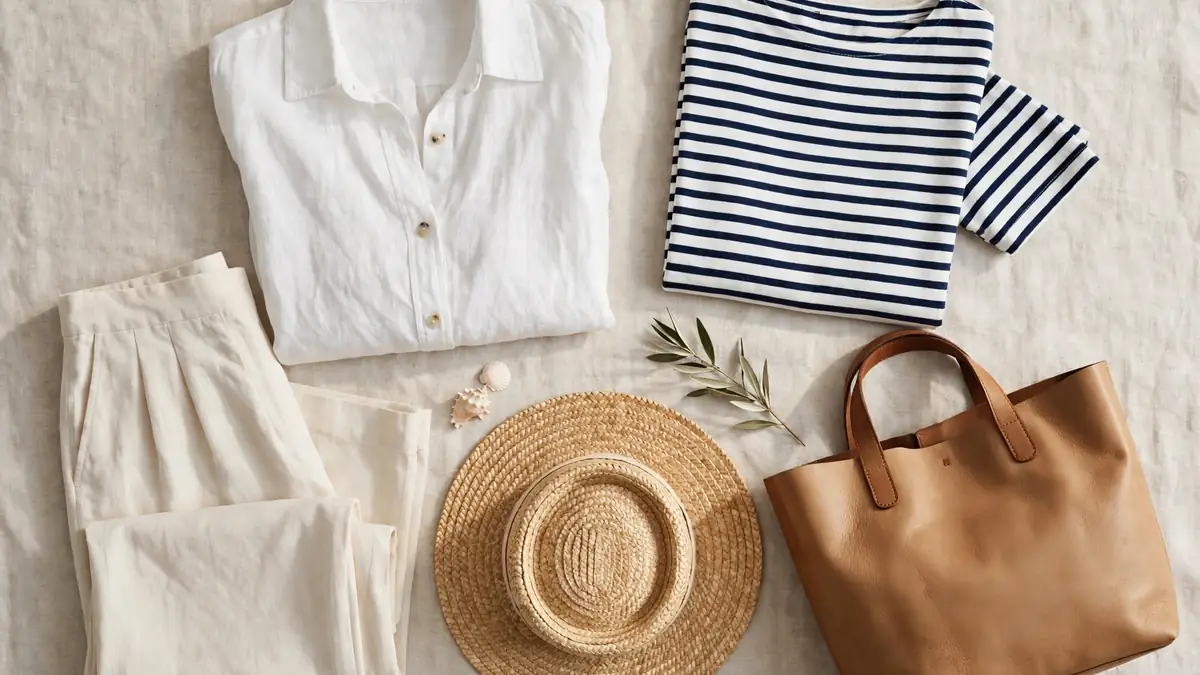
At its centre, the look is a palette and a posture. The palette is white, cream, navy, stone and soft blue, with a stripe doing most of the pattern work. The posture is relaxed: nothing tight, nothing fussy, nothing that needs constant adjusting. A white linen shirt open over a white tee, cream wide-leg trousers, leather sandals and a straw hat — that is the look in one sentence.
The fabrics matter more than the labels. Linen is the foundation, because it breathes in Australian heat and looks better slightly rumpled than pressed flat. Cotton — in a good poplin shirt or a heavyweight tee — does the everyday work. Knits appear in cooler months, usually a fine merino or cotton crew in cream or navy, draped over the shoulders as often as worn properly.
Coastal Grandmother vs Minimalist Fashion — and vs Beach Style
How It Differs From Minimalist Fashion
Minimalist fashion in Australia is about reduction: clean lines, a restrained palette, pieces chosen to last. Coastal grandmother style borrows that discipline but warms it up. Where minimalism can be severe — black, sharp tailoring, not a pattern in sight — this version adds softness: cream instead of stark white, a Breton stripe where minimalism would allow none, a straw hat where minimalism would stop at the outfit. Think of it as minimalism that has been outside in the sun. A good minimalist wardrobe is the fastest starting point — the difference is a shift in mood, not a new wardrobe.
How It Differs From Generic Beach Style
Beach style is swimwear first and everything else an afterthought. Coastal grandmother style is the opposite: a proper outfit that happens to work near the coast. A kaftan, a sarong and thongs are beach style. A linen shirt, tailored cream trousers and leather sandals are coastal grandmother style, and they would look just as right at a city lunch as two streets from the sand. The test is simple — if you would feel underdressed walking into a restaurant in it, it is beachwear, not this. The look is relaxed, but it is dressed.
Coastal Grandmother Style Australia: The Core Pieces
The White Linen Shirt
One good white linen shirt is the single most important piece. Look for mid-weight linen that drapes rather than collapsing into tissue, with a collar that holds its shape and a fit that is relaxed without swamping you. It should work tucked into trousers, loose over a tee, open over swimwear, and tied at the waist over a dress. If it only works one way, keep looking. For the local options, our guide to the best linen clothing brands in Australia covers the labels that take the fabric seriously, including the weights and weaves that decide whether a shirt lasts one summer or five.
The Breton Stripe
The navy-and-white Breton stripe is the look’s signature pattern, and usually its only one. A well-cut striped tee or boat-neck top in cotton or a cotton-linen blend works under a blazer, with white jeans, tucked into a linen skirt. Keep the stripe classic — navy on white or cream — and avoid novelty versions in bright colours or with slogans. The stripe should read as a neutral, not a statement.
Relaxed Tailoring
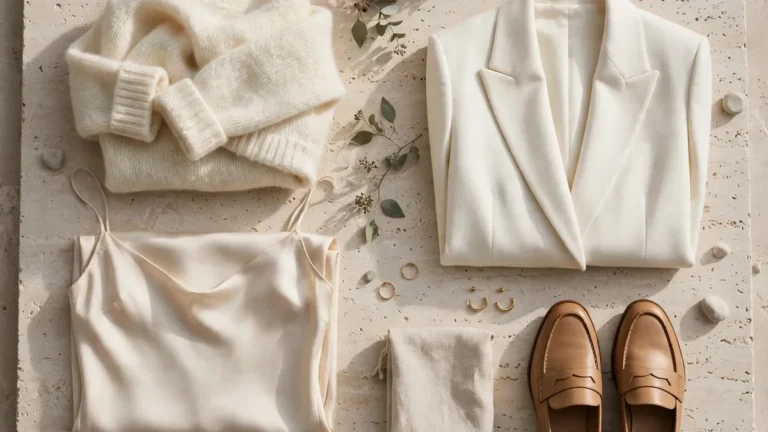
This is where the “elevated” in elevated ease comes from. A soft, unstructured blazer in cream or navy, sleeves pushed up, turns a linen shirt and trousers into a lunch outfit. Wide-leg trousers in cream, stone or navy linen are the other half: high-waisted, full through the leg, skimming a flat sandal. The tailoring is deliberately undone — no shoulder pads doing the talking, no sharp creases, nothing that looks like it came from a boardroom. The structure is there, but it is quiet.
The Easy Dress and the Draped Knit
A white or cream shirt dress in linen or cotton poplin is the warm-weather workhorse: one piece, no decisions, sandals and a tote and you are dressed. A simple slip dress in a soft neutral works the same way for evenings, layered under a linen shirt when the sea breeze picks up. Then there is the knit — a fine merino or cotton crew in cream, navy or soft blue, draped over the shoulders and knotted loosely at the front as often as worn properly. It is the look’s most recognisable gesture, and it works because the knit is good enough to be seen: no pilling, no sagging. In a Melbourne winter it is a proper layer under the blazer; in Brisbane it stays on the shoulders.
The Australian Labels That Do It Best
Matteau and St Agni
Matteau is the natural first stop. The Sydney label grew out of swimwear into ready-to-wear, and its crisp button-down shirts, Breton striped tees and tailored trousers are close to a coastal grandmother starter kit on their own. St Agni, founded in Byron Bay, brings the same relaxed polish: deconstructed tailoring, silk slip dresses and oversized button-downs in a neutral palette. Between the two you can build most of the wardrobe — try them in person, as their cuts run relaxed.
Dissh, Country Road and Witchery
For the everyday end, Dissh is a Brisbane label with a strong line in linen shirts, relaxed tailoring and easy dresses at accessible prices. Country Road has been an Australian staple for decades and remains a reliable place for white linen shirts, cream knitwear and wide-leg trousers cut for real life. Witchery, from the same group, covers similar ground with a slightly dressier tilt — worth a look for the blazer and the shirt dress.
Seed Heritage, Bassike and Zulu & Zephyr
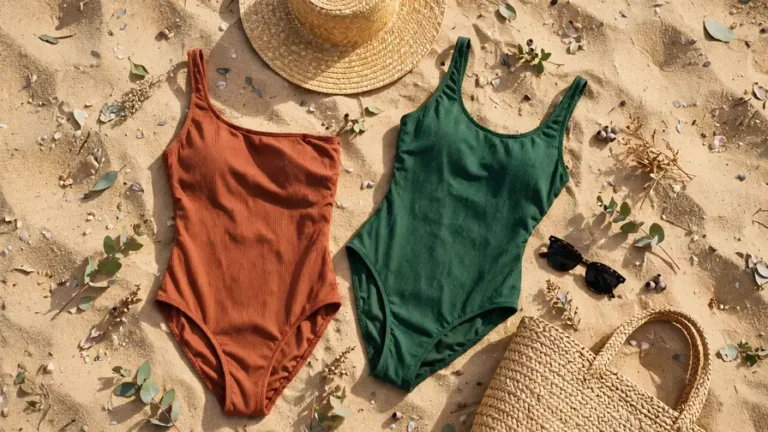
Seed Heritage is useful for the striped tee and the simple cotton pieces. Bassike, the Sydney label known for its organic cotton jersey, is the place for the plain white tee that sits under everything — the hardest-working item in the wardrobe. Zulu & Zephyr, the Byron Bay label, makes the swim pieces closest to this look: simple one-pieces and separates in muted tones, not loud prints. One plain, well-fitting swimsuit is enough, chosen like the rest of the wardrobe — no logos, no fuss.
How to Wear It Around Australia
Coastal Towns: Byron Bay, Noosa, the South Coast
On the coast, the look is at its most relaxed. A white linen shirt open over a plain swimsuit, cream linen shorts or wide-leg trousers, leather sandals and a straw hat is the whole outfit, and it is correct from the beach to a cafe. The mistake here is adding too much — jewellery beyond a simple pair of gold hoops, a bag that belongs in the city, shoes that cannot handle sand. Keep it to three pieces plus accessories.
City Lunches: Sydney and Melbourne
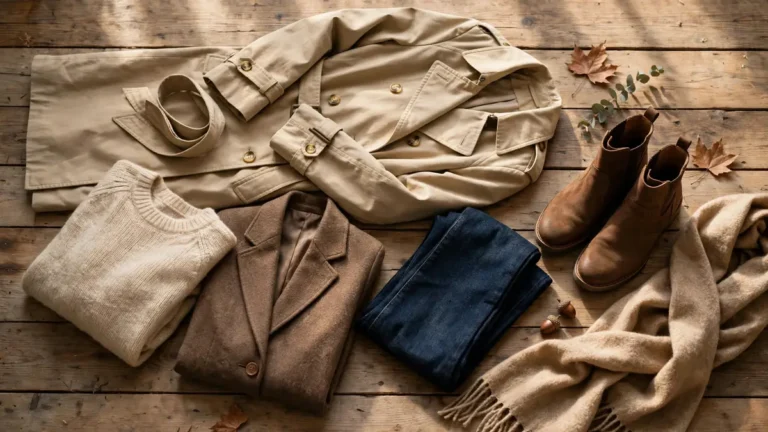
In the city, the tailoring comes forward. The unstructured blazer over the Breton stripe, wide-leg cream trousers, leather loafers or a low block heel, and a leather tote instead of the straw bag — same palette, same fabrics, one notch more polished. In Melbourne, add the knit worn properly and a trench in a cool month; in Sydney, the linen shirt on its own carries the day. It works in the city because it does not try to be urban — it stands out by being calm in a room full of trend pieces.
Holidays and Travel
For a holiday, pack the capsule and nothing else: two linen shirts (white and a stripe), one pair of wide-leg trousers, one dress, one knit, one pair of sandals and one pair of loafers. Everything in the case should pair with everything else, which makes the packing light and the dressing easy. If your trip leans towards a resort stay, our Australian resort wear guide covers the broader resort wardrobe — but for this look, resist the resort extras. The kaftans, prints and swim-first styling belong to a different look.
Accessories: Straw, Leather and a Little Gold
Accessories are where the look is finished, and where it is most often overdone. The rule is three materials: straw, leather and a little gold. Straw means one good hat. Lack of Color, the Queensland-founded Australian hat label, makes wide-brimmed straw and raffia styles that are the obvious choice, and the Broadsheet guide to Australian hat brands is a useful survey of the local options. Whatever you choose, it should shade your face properly — a hat that is only decorative is a prop.
Leather means one tote and one pair of sandals, both in tan or natural leather. Oroton, the Australian leather house, is the long-standing local name for a structured tote that still looks right with linen; for sandals, A. Emery makes simple leather styles in Australia. Avoid black leather — it is too hard against the palette — and anything with a visible logo. Gold is the only jewellery needed: small hoops, a fine chain, a simple bangle, two pieces at most, always the same metal.
The Traps: When the Look Tips Into Costume
The first trap is too much white at once: head-to-toe white with no stripe, navy trouser or tan bag to break it up reads as a uniform, not a style. The second is period dressing — a headscarf, an oversized basket bag or a cardigan worn like a shawl pushes the look towards a film set. The third is cheap linen: thin, shiny or loosely woven linen that goes see-through in sunlight is not the fabric this look is built on. Check the label — a “linen-look” blend that is mostly polyester will not breathe in Australian heat.
Finally, do not buy the whole look in one shop on one day. It should look collected over time — a shirt from one label, trousers from another, a hat found on holiday. Buying it all at once in matching shades makes you look like a catalogue, not a person. Add one good piece at a time and let the wardrobe settle.
Building It From a Wardrobe You Already Own
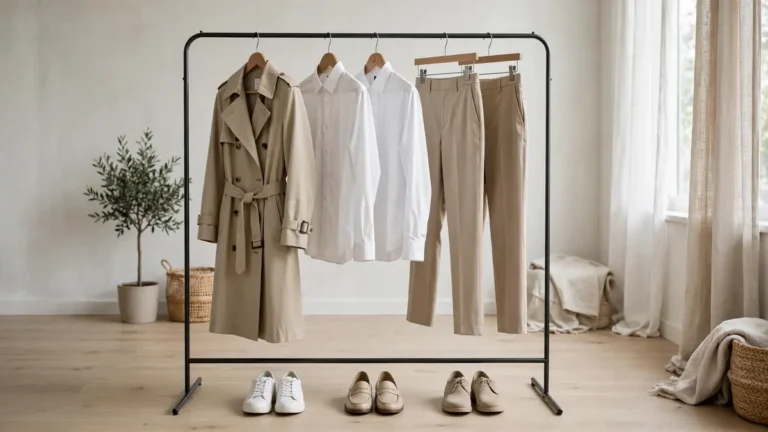
Most people are closer to this look than they think. A white shirt, a striped tee, cream trousers and a straw hat are already in many Australian wardrobes; the work is editing, not buying. Lay out everything white, cream, navy and stone that you own, and put aside anything that does not pair with at least three other pieces. What remains is the start of the wardrobe. Buy the gaps in order of wear: the shirt first, then the trousers, then the knit, then the accessories.
FAQs
What is coastal grandmother style?
Coastal grandmother style is a relaxed, polished look built on white linen, navy stripes, cream tailoring and straw and leather accessories. It takes its name from the sunlit, linen-draped world of Nancy Meyers films and is defined by a neutral palette, natural fabrics and an unhurried, put-together ease.
Is coastal grandmother style only for older women?
No. The “grandmother” in the name is a mood, not an age — unhurried, comfortable in her own taste and uninterested in chasing trends. The look suits any age, and its core pieces, like a white linen shirt and cream wide-leg trousers, are wardrobe staples for women in their twenties through to their seventies.
What is the difference between coastal grandmother style and minimalist fashion?
Minimalist fashion is about reduction — clean lines, a restrained palette and pieces chosen to last. Coastal grandmother style borrows that discipline but warms it up with cream instead of stark white, a Breton stripe where minimalism would allow no pattern, and straw and leather accessories. It is minimalism that has spent time in the sun.
What should I wear for coastal grandmother style in an Australian summer?
A white linen shirt, a navy-and-white Breton stripe top, cream wide-leg trousers or a linen shirt dress, leather sandals, a straw hat and a tan leather tote. Stick to linen and cotton so the outfit breathes in the heat, and keep the palette to white, cream, navy and stone.
Where can I buy coastal grandmother style in Australia?
Australian labels that do the look well include Matteau and St Agni for shirts and tailoring, Dissh, Country Road and Witchery for everyday linen pieces, Bassike for the plain white tee, and Lack of Color for straw hats. Most also sell online, and department stores like David Jones and Myer stock several of them.