
What to Pack for an Australian Summer Holiday 2026
Packing for an Australian summer is deceptively tricky. The country is vast, the summer (December to February) is genuinely extreme in places, and “summer holiday” can mean a week on a Queensland beach, a road trip through the Red Centre, or long lunches in Melbourne — each demanding a different suitcase. Get what to pack Australia summer right and the trip feels effortless; get it wrong and you spend the holiday shopping for things you should have brought.
This guide covers the clothing, footwear and essentials that actually earn their place in the bag, how packing changes by destination, and the sun-protection reality that overseas packing lists always underestimate.
Understanding Australian Summer
First, the baseline: Australian summer runs December to February, and it is not one climate. Sydney and Melbourne average in the mid-20s but swing into the high 30s during heatwaves. Brisbane and the Gold Coast are hot and humid. Darwin and Cairns are tropical — hot, wet and sticky. Perth is hot and dry. Tasmania is mild and changeable. The outback is brutally hot by day and can drop sharply at night.
The UV index is the part visitors consistently underestimate. Australia has some of the highest UV levels in the world, and summer sunburn happens in under 15 minutes on high-UV days. Sun protection is not an accessory here — it is core packing, as essential as your passport.
For destination-specific climate detail when planning, Tourism Australia’s official site has regional weather and season guides worth checking before you pack for a particular state.
The Core Summer Wardrobe
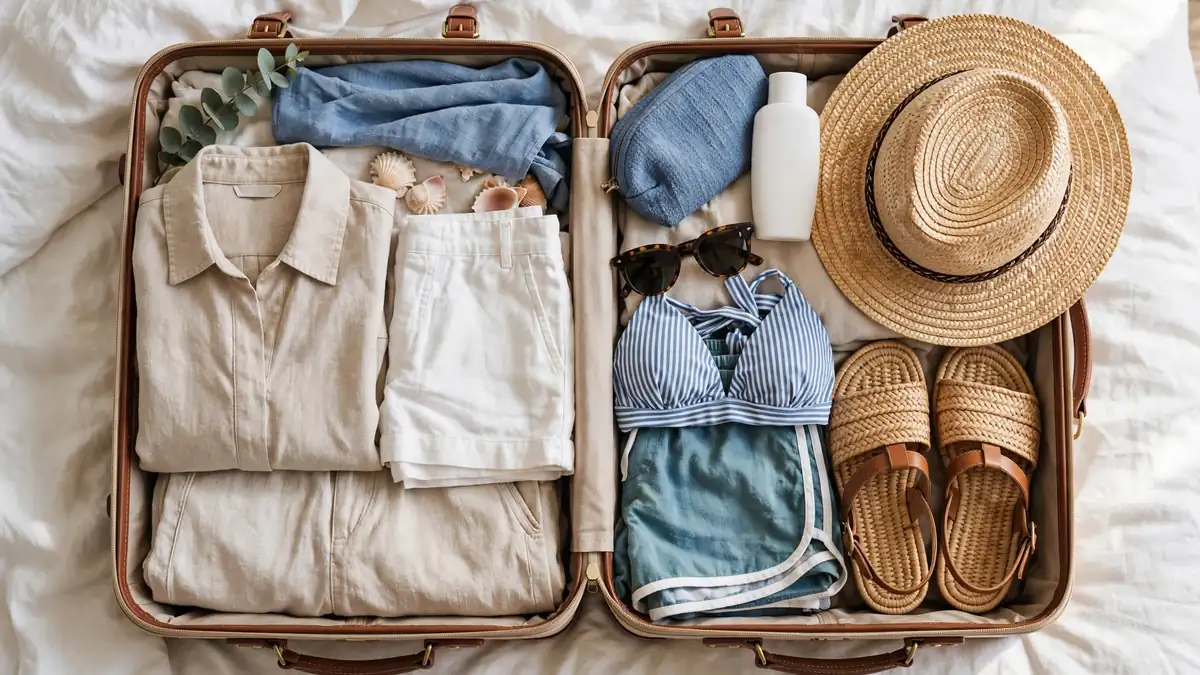
The foundation of an Australian summer suitcase is breathable, lightweight clothing in fabrics that handle heat and humidity. Think of it as a capsule: pieces that all work together so a small bag covers a long trip.
Fabrics that work
- Linen: the Australian summer fabric. Breathable, looks better slightly rumpled, handles humidity.
- Cotton: lightweight cotton and cotton voile for tops and dresses.
- Technical synthetics: for active days — hiking, cycling, water sports. They dry fast and don’t chafe.
- Avoid: heavy denim, polyester that doesn’t breathe, anything lined. Dark colours absorb heat.
The essential pieces
- Swimwear x2: two swimsuits or pairs of boardshorts so one can dry while you wear the other. Nothing is worse than pulling on a damp swimsuit.
- Cover-ups: a sarong, kaftan or overshirt that takes you from beach to café without a full outfit change.
- Shorts and lightweight trousers: 2–3 pairs. Linen trousers work for evenings when shorts feel too casual.
- Tops: 4–5 breathable tops — singlets, tees, one or two nicer tops for dinners.
- A summer dress or two: the hardest-working item in a warm-weather suitcase. One casual, one dressy.
- Light layers: a linen shirt, a light cardigan or shawl. Air-conditioning is aggressive in Australian malls, cinemas and restaurants, and evenings can cool down.
- Sleepwear: light cotton. Many Australian homes and holiday rentals don’t have air-conditioning in every room.
Footwear: What Actually Gets Worn
You will live in three pairs of shoes on an Australian summer holiday. Pack more and the extras stay in the bag.
- Thongs (flip-flops): the national footwear. Beach, pool, quick trips to the shops. Bring a comfortable pair, not the free hotel ones.
- Walking sandals or comfortable sneakers: for sightseeing days. You will walk further than you plan — Australian cities are spread out.
- One dressier option: leather sandals, espadrilles or smart flats for restaurants and evenings. Wedges over stilettos — many venues have outdoor areas with grass or decking.
If the trip includes hiking — the Blue Mountains, the Grampians, Tasmanian trails — proper walking shoes are non-negotiable. Don’t attempt Australian bush tracks in thongs; the terrain and the wildlife both argue against it.
Sun Protection: The Non-Negotiable Kit
This deserves its own section because it is where most packing lists fail. Australian summer sun is a health matter, not a comfort matter.
- Sunscreen SPF 50+: bring it or buy it on arrival — Australian sunscreen is excellent and strictly regulated. You will use far more than you expect; a family can go through a bottle in a few days.
- Hat: wide-brimmed is best. A hat you will actually wear beats a fashionable one you won’t.
- Sunglasses: with proper UV protection, not just dark lenses. Cheap sunglasses without UV filtering are worse than none.
- UPF clothing: a long-sleeve rashie (rash guard) for swimming and water sports. Standard issue for Australian kids; adults should follow suit.
- After-sun: aloe vera gel. Even careful people get caught out.
- Lip balm with SPF: sunburnt lips are miserable and common.
Packing by Destination
Beach holiday (Gold Coast, Byron Bay, Noosa)
Swimwear-heavy packing. Two swimsuits, cover-ups, shorts, singlets, one nice outfit for dinners. Thongs and sandals. A beach bag, a dry bag for the phone, and a microfibre towel (dries fast, packs small). Most beach towns are casual — you will overdress in anything structured.
City break (Sydney, Melbourne, Brisbane)
Cities demand more versatility. Days are casual — shorts, dresses, sneakers for walking. Evenings step up: Australians dress well for dinner, and a smart-casual outfit (not formal, but polished) fits everywhere from pubs to restaurants. Melbourne evenings in particular can cool down sharply, so that light layer matters. One “nice” outfit covers restaurants, bars and shows.
Tropical north (Cairns, Darwin, the Whitsundays)
Heat plus humidity plus the wet season (roughly November to April in the far north). Pack the lightest fabrics you own, expect to feel damp most of the day, and bring insect repellent — tropical mosquitoes are relentless, especially at dawn and dusk. A light rain jacket is wise; tropical downpours are brief but total. Reef-safe sunscreen if you’re heading to the Great Barrier Reef.
The outback and Red Centre
Uluru, Kings Canyon, the Kimberley. Days are extremely hot; nights can be surprisingly cold even in summer. Pack for both: light breathable clothing for the day, a warm layer for the night. A wide-brim hat is essential — there is no shade. Sturdy closed shoes for walks on hot rock. And far more water capacity than you think you need; hydration gear is safety equipment, not an accessory.
Tasmania
Tasmanian summer is the wildcard. Days can be glorious and in the mid-20s, or 14 degrees and raining. Pack as for spring elsewhere: layers, a proper rain jacket, and walking shoes. Don’t be the tourist in shorts and a singlet shivering at Cradle Mountain in January.
The Toiletries and Health Kit
- Insect repellent: tropical-strength for the north; standard for elsewhere. Mozzies are worst at dawn and dusk near water.
- Basic first aid: bandaids, antiseptic, blister treatment, antihistamines. Bluebottle stings and coral cuts happen.
- Hydration: electrolyte sachets for heatwave days and active days. Dehydration creeps up fast in dry heat because you don’t feel sweaty.
- Prescriptions and basics: any medication, plus paracetamol and rehydration salts. Pharmacies are everywhere in cities but scarce in remote areas.
- Snorkel gear (optional): if you’re reef-bound, your own mask is more comfortable than hire gear. Fins are usually better hired.
Tech and Travel Gear
- Power bank: essential for long beach and sightseeing days away from outlets.
- Waterproof phone pouch: cheap, and saves the most expensive item in your bag.
- Universal adapter: Australia uses Type I plugs (230V). International visitors need an adapter; the plug shape is unique to Australia, New Zealand and a few Pacific nations.
- Dry bag: for boat trips, kayaking, and sudden tropical downpours.
- Reusable water bottle: Australian tap water is excellent and safe everywhere. Refill constantly.
What Not to Pack
Heavy jeans — you will wear them once, maybe. More than one “just in case” nice outfit. Full-size toiletries (buy sunscreen and basics on arrival — they’re cheaper and better suited to local conditions). Too many shoes. A hair straightener if you’re heading anywhere humid — the weather will win. And anything you can’t afford to get sand in, because sand gets into everything.
Packing for Kids and Family Holidays
Children change the packing equation. Kids need more changes of clothes (ice cream, sand, sunscreen reapplication), dedicated sun protection, and entertainment for travel days. Pack each child: 2 swimsuits, a long-sleeve rashie, a wide-brim hat with a chin strap, thongs and closed shoes, and more shorts and tees than you think necessary.
Non-negotiables for family beach days: a beach tent or shade shelter (Australian beaches have limited natural shade), plenty of water and snacks, and a basic first-aid kit. Most Australian beaches are patrolled in summer — swim between the red and yellow flags, and teach kids what the flags mean before the first beach day. It’s the single most important safety briefing of the holiday.
Laundry, Rewearing and Packing Light
Most Australian holiday rentals, apartments and even many motels have washing machines or laundries nearby. Planning to wash once mid-trip lets you pack for a week even on a three-week holiday. Quick-dry fabrics earn their place here: a linen shirt washed in the evening is dry by morning in summer heat.
The rewear hierarchy for summer: shorts and trousers get multiple wears; tops get one to two; swimwear rinses daily; underwear and socks are the only items worth packing in full quantity. A small bottle of travel detergent weighs almost nothing and buys you enormous packing freedom. And pack a dedicated laundry bag — separating worn from clean in a shared suitcase keeps the whole system working.
What to Buy on Arrival Instead of Packing
Some things are better bought in Australia than packed. Sunscreen is the big one — Australian SPF 50+ is world-class, strictly regulated, and cheaper than imported equivalents. Insect repellent, after-sun gel and basic toiletries are all widely available at supermarkets and pharmacies in every town.
Thongs are another buy-on-arrival item if yours are worn out — every Australian supermarket sells them, and buying a pair is practically a holiday ritual. Beach towels, snorkel gear and shade equipment are cheaper to buy at Kmart or a surf shop than to lug internationally. Save your luggage space for the things you can’t replace: prescription medication, preferred skincare, and shoes that already fit. Travelling light also leaves room for the souvenirs and local labels you’ll inevitably pick up along the way.
The Carry-On Strategy
If you’re flying into Australia, pack a change of summer clothes, swimwear, sunscreen and a hat in your carry-on. Luggage delays happen, and arriving to 35-degree heat in the jeans you wore on the plane while your bag tours another airport is a miserable start. Domestic flights within Australia are frequent and baggage allowances vary — check before you fly, especially on budget carriers where checked bags cost extra.
Plan the sun side of the trip, too: start with our guide to the best sunscreens in Australia before you pack a single shirt, then build outfits around the pieces in the Australian summer fashion guide and, if water is on the itinerary, the swim picks in our Australian swimwear brands round-up.
FAQs
What clothes should I pack for Australia in summer?
Lightweight, breathable clothing: linen and cotton tops, shorts, summer dresses, swimwear and a light layer for air-conditioning and cool evenings. Pack for the specific region — tropical north, outback and Tasmania all need different additions.
How hot does it get in Australia in summer?
It varies enormously by region. Sydney and Melbourne average mid-20s but hit high 30s in heatwaves; the tropical north is hot and humid; the outback is extremely hot by day. Always check the forecast for your specific destination before packing.
Do I need winter clothes for an Australian summer holiday?
Not winter clothes, but layers. Evenings cool down, air-conditioning is strong indoors, Tasmania can be genuinely cold, and outback nights drop sharply. A light jacket, cardigan or shawl covers all of these.
What sun protection do I need in Australia?
SPF 50+ sunscreen, a wide-brimmed hat, UV-protection sunglasses, and a rashie for water activities. Australia’s UV index is among the highest in the world — sunburn can happen in under 15 minutes on extreme days.
What shoes should I pack for Australia?
Thongs for the beach, comfortable walking sandals or sneakers for sightseeing, and one dressier pair for evenings. Add proper walking shoes if hiking is on the itinerary.
What plug adapter do I need for Australia?
Australia uses Type I plugs at 230V — a plug shape unique to Australia, New Zealand and parts of the Pacific. International visitors need a Type I adapter.