
Athleisure in Australia: How to Style It in 2026
If there’s one dress code Australia has truly made its own, it’s athleisure. Knowing how to style athleisure Australia-wide isn’t just about looking good at the gym — it’s about nailing the outfits that take you from a 6am class to school drop-off, a client coffee, and dinner without a full costume change. In 2026 the look has grown up: it’s less “I just worked out” and more “I dress well and happen to be comfortable.” This guide breaks down the wardrobe building blocks and gives you outfit formulas for every part of your day, plus the Australian brands doing it best.
What Athleisure Actually Means in 2026
Athleisure is athletic clothing worn as everyday fashion — leggings, bike shorts, hoodies, sneakers, and sports bras styled as proper outfits rather than workout gear. The idea took off globally in the 2010s, but Australia had a head start: local labels were selling fashionable activewear years before the rest of the world caught on, and our outdoors lifestyle made the look feel natural rather than forced.
In 2026, the difference between athleisure and just wearing gym clothes comes down to intention. Athleisure is styled — fabrics are considered, proportions are balanced, and the pieces work together as an outfit. Slapping on whatever was clean after spin class is not athleisure; it’s laundry day. The good news is that the formula is simple once you know it, and most of the pieces are things you probably already own.
The Building Blocks of an Athleisure Wardrobe
Before the outfit formulas, get the foundations right. A working athleisure wardrobe needs surprisingly few pieces:
- Two pairs of quality leggings — one black, one in a colour or print you love. Look for squat-proof fabric with a high waistband that stays put. This is the piece worth spending on.
- Bike shorts — the summer staple. Longer lengths (around 20cm) read more polished; shorter lengths are strictly for workouts.
- Sports bras and crop tops — medium to high support for training, plus one or two you genuinely like the look of for layering.
- An oversized sweatshirt or quarter-zip — the layer that makes leggings look like an outfit. Neutral colours (oatmeal, grey, black) get the most wear.
- A structured jacket — a bomber, a cropped puffer, or a blazer if you’re heading somewhere smarter.
- Clean sneakers — one pair of trainers for actual workouts, one pair of lifestyle sneakers that never see the gym floor.
- A decent bag — a tote or a crossbody instantly lifts activewear out of gym territory.
Fit matters more than brand. Leggings should pass the squat test in daylight, waistbands shouldn’t roll, and sports bras need to actually support you. Buy the best you can afford in the pieces you wear most.
How to Style Athleisure for the Gym — and Straight After
The classic athleisure scenario: you’re training in the morning and have somewhere to be after. The trick is choosing workout pieces that look good enough to wear out, then adding one or two “street” layers.
Start with a matching or tonal set — a sports bra and leggings in the same colour family always looks more considered than a random mix. After your session, throw an oversized sweatshirt or a quarter-zip over the top, swap your trainers for clean lifestyle sneakers, and add sunglasses. That combination reads as an outfit, not as post-gym dishevelment.
A few practical tips make this work. Keep a dry bag or wet pouch in your gym bag for sweaty gear. Pack deodorant and a face wipe for the transition. And if your hair is the giveaway, a slicked-back bun or a cap covers a multitude of sins — it’s practically the unofficial uniform of the school-run-to-Pilates crowd.
How to Style Athleisure for Brunch and Errands
Weekend athleisure is where the look really shines. The formula here is: one sporty piece, one polished piece, and one personality piece.
Try bike shorts with an oversized linen shirt worn open over a crop top, finished with chunky sneakers and a crossbody bag. Or black leggings with a longline knit, a denim jacket, and white sneakers. The contrast is what makes it work — if everything is activewear, you look like you’re heading to F45; if nothing is, it’s not athleisure at all.
Accessories do heavy lifting on weekends. A baseball cap, gold hoops, a decent watch, and a structured tote all signal that this was a choice. And keep the colour palette tight — head-to-toe black with one accent colour is the easiest win in the book.
How to Style Athleisure for the Office
Office athleisure is the trickiest version to get right, and whether it flies at all depends on your workplace. In creative, tech, and startup environments across Sydney and Melbourne, it’s completely normal. In corporate law or finance, it isn’t — know your room.
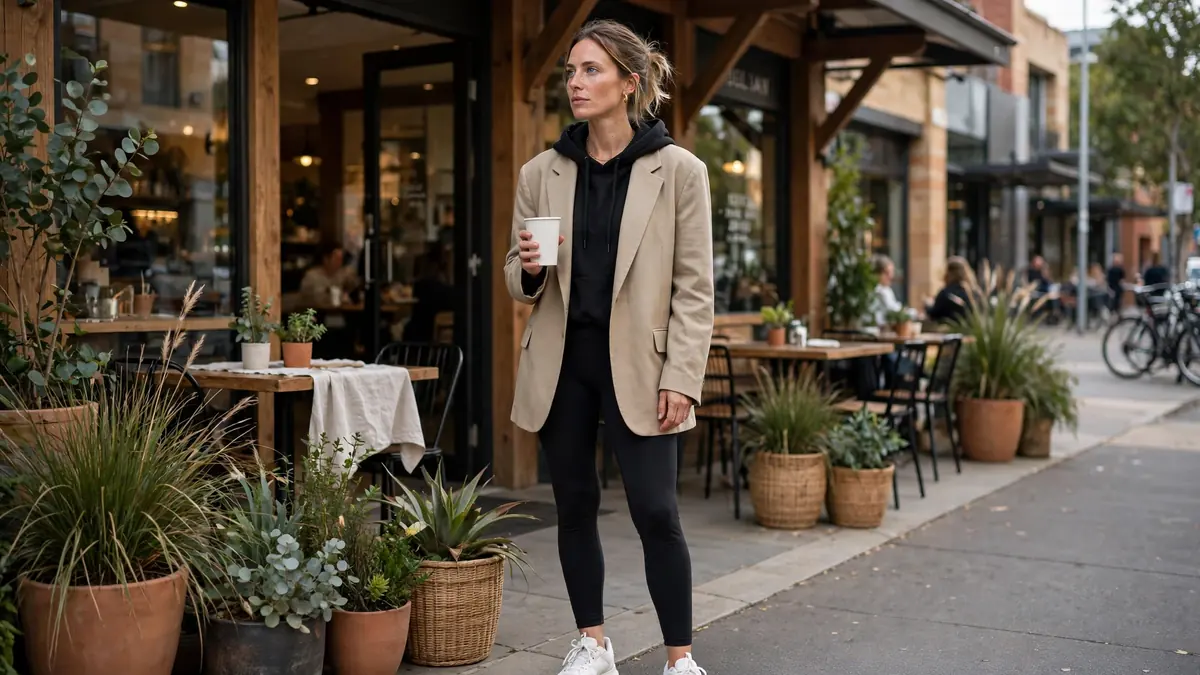
Where it’s acceptable, the rule is structure over stretch. Swap leggings for tailored joggers or ponte pants in black or navy. Pair them with a crisp shirt or a fine-knit top, a blazer, and minimalist sneakers in leather or a clean white — not your running shoes. The blazer is the single piece that makes activewear read as “smart casual” instead of “casual.”
Stick to dark, solid colours and avoid visible logos, mesh panels, or anything with reflective detailing. Your gym leggings with the mesh cut-outs stay at home; a matte black jogger with a blazer goes to work. When in doubt, dress one notch smarter than you think you need to.
How to Style Athleisure for Evenings Out
Evening athleisure sounds like a contradiction, but it works for casual dinners, the pub, or a low-key bar. The approach: black on black on black, with one luxe texture.
Black leggings or coated joggers, a black one-shoulder top or a fitted long-sleeve, an oversized blazer, and heeled boots or sleek platform sneakers. Add gold jewellery and a clutch instead of a gym bag, and nobody is thinking about your workout. Faux leather leggings are the evening secret weapon — they read as trousers in dim light and look far dressier than standard activewear fabric.
Keep the sporty elements to one or two pieces maximum. A full tracksuit at dinner is a choice, but not one most of us can pull off — unless the tracksuit is a matching set in a premium fabric, which is the one exception that genuinely works after dark.
Athleisure Mistakes Australians Keep Making
A few common missteps separate good athleisure from “I give up”:
- Wearing actual gym shoes everywhere. Keep a separate pair of lifestyle sneakers for non-workout wear. Scuffed trainers with worn soles drag the whole outfit down.
- See-through leggings. Do the daylight squat test before you buy. If in doubt, size up or choose a thicker fabric.
- Too much activewear at once. Head-to-toe branded gym gear reads as a uniform. Mix in at least one non-sport piece — denim, linen, knitwear, or a proper jacket.
- Ignoring proportions. Tight on the bottom means relaxed on top, and vice versa. Leggings with an oversized hoodie works; leggings with a tight crop and nothing else is a workout outfit, not a street outfit.
- Forgetting the weather. A puffer over bike shorts in a Melbourne winter looks confused. Dress for the actual temperature, not the aesthetic.
The Australian Athleisure Brands Worth Knowing
Australia punches well above its weight in activewear, and shopping local means designs made for our climate and lifestyle.
Lorna Jane is the original. Founded in Brisbane in 1990 by aerobics instructor Lorna Jane Clarkson, who started sewing her own workout gear because nothing on the market worked, the brand essentially pioneered fashionable activewear in Australia long before “athleisure” was a word. Its history is well documented on Wikipedia, and the label remains a go-to for colourful, feminine training wear.
P.E Nation brought streetwear energy to the category. Founded in Sydney in 2016 by Pip Edwards and Claire Greaves, it blends ’90s streetwear aesthetics with technical activewear — bold colour blocking, retro branding, and pieces designed to be seen outside the gym as much as in it.
Cotton On Body is the budget-friendly option from the Geelong-based Cotton On Group — great basics, sleepwear-adjacent comfort pieces, and prices that make stocking up painless. Nimble Activewear, designed in Sydney, focuses on sustainable fabrics and flattering fits. 2XU, the Melbourne compression brand, is the pick when performance actually matters — their tights are genuinely engineered, not just styled. And Stylerunner remains the best local one-stop shop for curating pieces across multiple brands.
Athleisure Through the Australian Seasons
Australian athleisure has to work across wildly different climates, and the formula shifts with the season. In summer — which across most of the country means December through February — it’s bike shorts, crops, and singlets with slides or breathable sneakers. Light colours reflect the heat, and moisture-wicking fabric isn’t a luxury when you’re walking to the station in 35 degrees.
Autumn and spring are athleisure’s golden seasons: leggings with an oversized sweatshirt, a quarter-zip over a long-sleeve top, light jackets you can tie around your waist. This is when layering does the most work, and when the same outfit can genuinely span a 12-degree morning and a 24-degree afternoon.
Winter athleisure depends entirely on where you live. In Brisbane, it’s much like autumn elsewhere — leggings, a hoodie, done. In Melbourne, Canberra, or Hobart, you need proper winter layers: thermal leggings or joggers, a puffer or a heavyweight hoodie, a beanie, and sneakers that can handle wet pavement. The principle stays the same — one sporty piece, one polished piece — but the fabrics get heavier and the palette gets darker.
Building an Athleisure Wardrobe on a Budget
You don’t need a drawer full of premium labels to nail this look. The smart-budget approach is to spend on the pieces that do the most work and save on the rest. Splurge on leggings — good ones last years, bad ones go sheer in months — and on one pair of lifestyle sneakers you’ll wear constantly. Save on sweatshirts, tees, and socks, where the difference between a $30 and a $90 version is mostly branding.
Cotton On Body and similar value retailers are genuinely good for basics: plain black leggings, simple hoodies, and socks in multipacks. Then add one or two “hero” pieces from a premium Australian label — a P.E Nation jacket or a Lorna Jane printed tight — that make the whole wardrobe feel more considered. Second-hand is also worth a look: activewear from quality brands holds up well, and resale platforms are full of barely-worn pieces at half the price.
Finally, take care of what you own and it lasts. Wash activewear cold, skip the fabric softener (it coats the technical fibres and kills their wicking ability), and hang dry rather than tumble drying. Elastic and heat are enemies — treat your leggings gently and they’ll return the favour for years.
More activewear reading: the performance end of this category is covered in our best Australian activewear brands guide, and the labels that cross over into everyday dressing feature in our best Australian fashion brands for women round-up.
FAQs
Can you wear athleisure to work in Australia?
It depends on your workplace. In creative, tech, and startup environments it’s widely accepted, especially styled with a blazer and minimalist sneakers. In corporate or client-facing roles, stick to tailored joggers or ponte pants rather than leggings, and keep colours dark and logos minimal.
What is the difference between activewear and athleisure?
Activewear is clothing designed for exercise — it’s about performance. Athleisure is athletic-inspired clothing styled as everyday fashion. The same leggings can be either, depending on how you wear them: with a sports bra at the gym they’re activewear; with an oversized knit, blazer, and clean sneakers for brunch they’re athleisure.
How do I make leggings look classy?
Choose thick, opaque fabric in black, pair them with longer layers (oversized shirts, longline knits, or blazers), and finish with clean sneakers or boots rather than gym trainers. Adding one structured piece — a blazer, a denim jacket, or a decent bag — is what makes leggings read as an outfit.
What shoes go with athleisure besides sneakers?
Chunky loafers, platform sandals, heeled boots, and slides all work with athleisure depending on the occasion. The key is contrast: pairing sporty pieces with a slightly dressier shoe is what keeps the look intentional rather than lazy.
Which Australian brands are best for athleisure?
Lorna Jane (founded in Brisbane in 1990) and P.E Nation (founded in Sydney in 2016) are the two most established Australian names. Cotton On Body covers affordable basics, Nimble focuses on sustainable fabrics, and 2XU leads on performance compression. Stylerunner is a good multi-brand retailer for discovering new labels.