
Relaxed Tailoring Men Australia: The Smart Guide
For years, Australian men dressed up by putting on armour: a stiff suit, a tight collar, a tie knotted like a tourniquet. Then the office changed, weddings moved outdoors, and the temperature refused to cooperate. Relaxed tailoring men Australia is the answer that grew out of all three at once — tailoring that keeps the sharp silhouette and drops everything that makes a suit feel like a punishment. It is proper tailoring, rebuilt around comfort: soft shoulders, breathable cloth, and cuts that let you sit, walk and eat lunch like a normal person.
The idea is simple, but the execution is where most men go wrong. Relaxed does not mean oversized, and comfortable does not mean sloppy. A good relaxed outfit still has a clear shoulder line, a clean trouser break and a colour story that looks deliberate — the difference is what you cannot see: no shoulder padding, no stiff canvas, no lining trapping heat against your back. The tie is all but dead outside a few holdout industries, and the old uniform no longer fits the room.
Relaxed Tailoring Men Australia: What It Actually Is
Relaxed tailoring is traditional tailoring with the structure taken out. A classic suit jacket is built like architecture: shoulder pads, a canvas chest piece, a full lining, and enough internal engineering to hold its shape on a hanger. An unstructured blazer removes most of that. The shoulder follows your own shoulder instead of building a new one on top of it, the chest drapes rather than stands, and the jacket weighs noticeably less — on your back in February most of all.
The trousers change in the same direction. Instead of a rigid waistband and a razor crease, relaxed tailoring favours a softer waist — drawstring, elasticated, or simply cut with a little more ease — and a straighter leg that falls cleanly instead of gripping the thigh. They still look like tailored trousers, because they are: a proper fly, a finished hem, a fabric with enough weight to drape.
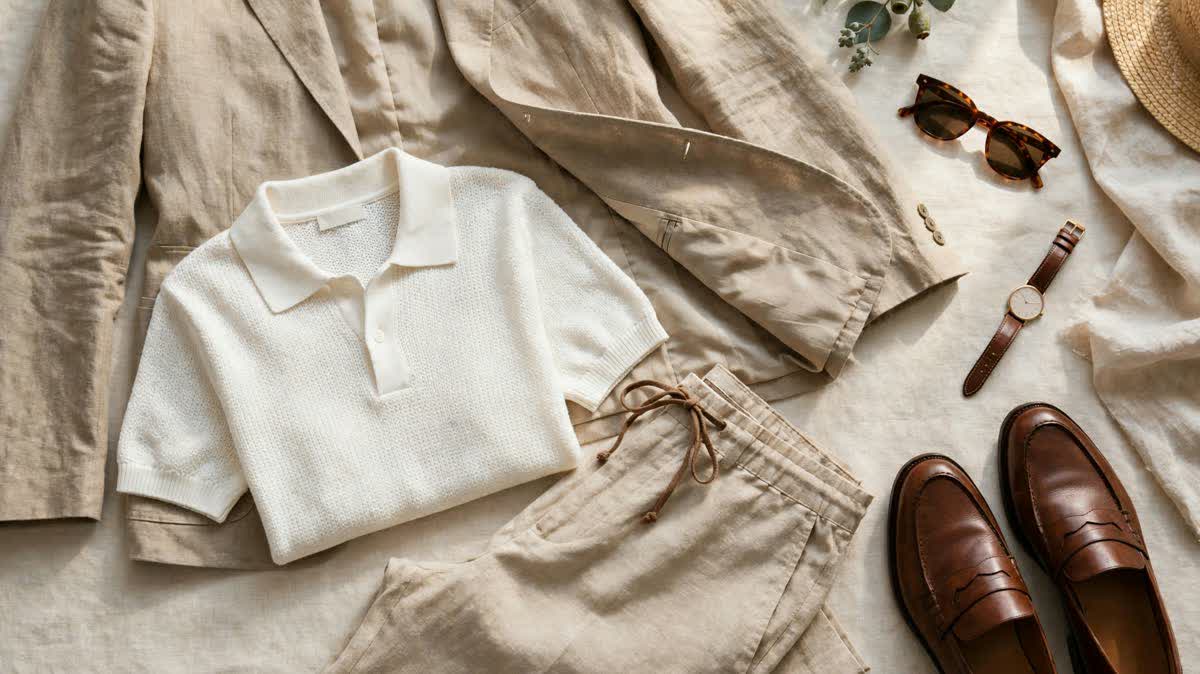
The third piece is what goes underneath. The stiff business shirt gives way to a knit polo, a fine-gauge merino crew or a soft open-collar shirt. A knit polo under an unstructured blazer is the single most useful combination in relaxed tailoring: it reads as dressed up from across a room and feels like a T-shirt when you are wearing it. What it is not matters too — not athleisure, not a tracksuit with a blazer over it, not oversized streetwear. The shoulders still sit on your shoulders, the jacket ends around mid-hip, and the trousers break at the shoe.
The Core Pieces of a Relaxed Tailored Wardrobe
The unstructured blazer
This is the piece the whole look hangs on. Look for no shoulder padding — or the lightest touch of it — a half lining or no lining at all, and a soft, natural shoulder line. Linen and linen blends are the summer default; tropical wool handles the months when you want a little more structure without the heat. The fit should skim: room to move without the shoulder seam sliding past your own shoulder. Navy, charcoal and sand cover nearly everything; wear it open.
Soft trousers: drawstring, elastic and easy waistbands
Relaxed trousers are where comfort becomes visible. A drawstring waist in linen or a linen blend is the warm-weather standard, and it works because the fabric is good enough to look tailored even with a casual waistband. Elasticated waists, hidden behind a clean front, offer the same comfort with a smarter face. The key detail is the leg: straight or gently tapered, with enough room through the thigh that the fabric falls rather than clings. Colour first: navy, stone and charcoal, with a clean hem and a slight break or none at all.
The knit polo and the open-collar shirt
Under the blazer, the knit polo is the workhorse. A fine-gauge knit in cotton, merino or a blend sits flat under a jacket, holds its collar without flopping, and looks a level smarter than a T-shirt. White, navy and charcoal first; a muted olive or cream adds range. The open-collar shirt is the alternative for days when you want a little more formality: a linen or cotton-linen shirt worn open reads as considered, as long as the shirt itself is good quality. Tuck it in for the office and a wedding; leave it untucked only on a genuinely casual weekend.
Shoes that finish the look
Relaxed tailoring fails fastest at the feet. The right shoe is a suede loafer, a clean leather loafer, or a minimal white leather sneaker — nothing chunky, nothing sporty, nothing with visible branding. Loafers are the default: they bridge the gap between a dress shoe and a casual shoe, and they work with every trouser in this wardrobe. Brown suede is the most versatile single choice in Australia. Save the lace-up oxfords for the occasions that still demand them, and leave the runners for the gym.
Relaxed Tailoring Men Australia: Fabrics That Handle the Heat
Fabric is the decision that matters most in Australian conditions, because the wrong cloth will undo a perfect fit by midday. Linen leads the list: its open weave moves air against the skin and releases moisture instead of trapping it, which is exactly what a 35-degree day demands. Mid-weight linen drapes well and wrinkles in a way that looks lived-in; very light linen goes sheer, so check the weight before buying. Our men’s summer style guide covers linen in detail.
Linen blends are the practical compromise. Linen mixed with cotton keeps most of the breathability while resisting the worst of the creasing, and it is often the better choice for trousers. A linen-cotton blazer is the piece to buy first if you can only buy one: it handles heat, holds a shape, and looks right from December through March.
Tropical wool is the fabric most men overlook, and it is arguably the most useful of all. Woven loosely from fine merino, it breathes far better than its name suggests and drapes with a clean, tailored fall that linen cannot match. A tropical wool blazer in navy is the closest thing relaxed tailoring has to a four-season piece in Australia: cool enough for a warm day, structured enough for a formal room, and resistant to creasing.
Tencel, made from wood pulp, drapes beautifully and feels cool against the skin, showing up in the softer shades — sage, stone, pale blue — that suit relaxed tailoring. Look for it in blends with linen or cotton. What to avoid is just as clear: heavy polyester and thick synthetic blends trap heat and shine under strong light, and anything labelled “linen-look” without a composition label to back it up will not breathe like linen no matter what the swing tag promises.
Fit Rules That Keep It Sharp, Not Sloppy
Relaxed tailoring has a narrow band of correct fit. First, the shoulder seam of the blazer must sit on your shoulder. Too wide and you look like you borrowed someone else’s jacket; too narrow and it pulls every time you move. This is the one fit point you cannot fix with alterations, so get it right in the shop.
Second, the jacket should skim the body, not hug it and not hang off it. You should be able to pinch about two fingers’ worth of fabric at the side, and no more. If it flares open at the front, it is too tight; if it hangs like a curtain, it is too big.
Third, the trouser break. Relaxed trousers should end at the shoe with a slight break or none at all. Pooling fabric at the ankle instantly cheapens everything above it. Hem them properly; a good alterations tailor will sort this in a day, and it is the best money you will spend on the outfit.
Fourth, proportion. A relaxed jacket pairs with a relaxed trouser, and a slim layer underneath keeps the whole thing from ballooning. The common error is going loose everywhere at once — wide jacket, wide trousers, oversized shirt — which reads as a man drowning in his clothes. One relaxed element per outfit is the safe rule. Finally, try before you buy: sizes vary wildly between labels, and one brand’s “relaxed” is another’s “regular”.
Where to Wear It: Office, Weddings, Dinners and Weekends
The office without a tie
The modern Australian office is the home ground of relaxed tailoring. A navy unstructured blazer, a white or pale blue open-collar shirt, and charcoal or navy tailored trousers is the formula, with brown loafers to finish. In formal industries — law, finance, senior consulting — keep the colours conservative and the fabrics wool-based; in creative and tech workplaces, linen and lighter tones are fine. For the brands that anchor this look, our best workwear brands for men guide covers the labels worth your money.
Weddings
Australian weddings are where relaxed tailoring earns its keep, because so many happen outdoors, in heat, with a dress code that says “smart” and means “do not wear a stiff suit”. A full linen suit in sand or light grey, with a white open-collar shirt and no tie, is the standard for a beach or garden wedding. For an indoor evening wedding, switch to a tropical wool suit in navy with a knit polo and loafers. Skip black and keep the colours tonal: cream, sand, pale blue and stone. The one hard rule: if the invitation says formal or black tie, relaxed tailoring stays home and the proper suit comes out.
Dinners and evenings out
Evenings are where relaxed tailoring looks its best, because the light is softer and the fabrics show their texture. A charcoal unstructured blazer over a black or navy knit polo, with dark tailored trousers and suede loafers, is the dinner formula that never fails. Add a simple watch and leave the rest alone — the look works because it is quiet, and extra accessories just add noise.
Smart-casual weekends
Weekends are the easiest test of the wardrobe. A sand linen blazer over a white T-shirt with stone drawstring trousers and clean sneakers is a Saturday lunch outfit that looks considered without trying. Drop the blazer and the knit polo with tailored linen trousers carries a Sunday by itself. One relaxed element at a time, and the shoes stay clean.
Labels Worth Knowing in Australia
Brand names matter here only because they tell you where the construction is done properly. A few Australian-available names consistently get relaxed tailoring right.
M.J. Bale is the starting point for proper tailoring in Australia. The Sydney-founded label builds its suits for Australian climates — deconstructed, less padding, mostly lightweight superfine Australian merino wool. Its own guide to buying a suit online is a useful read on measurements and fit before you order. P. Johnson, with ateliers in Sydney, Melbourne and Brisbane, is the connoisseur’s version of the same idea: unstructured shoulders, natural silhouettes and fabrics with real character.
Rodd & Gunn sits between tailoring and casual, with sport coats, chinos and polos that fit a relaxed wardrobe naturally. Country Road brings its relaxed Australian aesthetic to menswear with beautiful cottons and linens and easy tailoring. Saba is the all-rounder for stretch fabrics and comfortable suiting separates. At the accessible end, Industrie covers the everyday side — linen shirts and easy basics at honest prices — and Uniqlo is the value benchmark for real linen shirts and Supima cotton tees. Venroy handles the polished resort end, with suiting separates sharp enough for the office. For the full picture, our best Australian fashion brands for men guide profiles the labels in depth.
FAQs
What is relaxed tailoring?
Relaxed tailoring is traditional tailoring with the stiff structure removed: unstructured blazers with soft shoulders, trousers with drawstring or elasticated waists, and knit polos or open-collar shirts instead of a tie. It keeps the sharp silhouette of a suit while feeling comfortable all day.
Can you wear relaxed tailoring to the office in Australia?
Yes, in most Australian offices. A navy unstructured blazer with an open-collar shirt and tailored trousers is the modern standard for business-casual workplaces. In formal industries like law and finance, keep colours conservative and fabrics wool-based.
What fabrics are best for relaxed tailoring in Australian summers?
Linen and linen-cotton blends lead the list for breathability, tropical wool is the most versatile option because it drapes well and resists creasing, and Tencel blends add fluidity in softer shades. Avoid heavy polyester and thick synthetics, which trap heat.
Is relaxed tailoring OK for a wedding?
Yes, for most Australian weddings. A linen suit in sand or light grey with a white open-collar shirt and no tie is the standard for beach and garden weddings, while a tropical wool suit in navy suits an indoor evening. Formal or black tie means a proper suit instead.
Where can men buy relaxed tailoring in Australia?
M.J. Bale and P. Johnson are the strongest Australian options for soft, unstructured tailoring, Rodd & Gunn and Country Road cover the smart-casual middle ground, and Industrie and Uniqlo are the accessible end for linen shirts and easy basics.