
Linen Dresses Australia Summer: The Occasion Edit
There is no single best linen dress for an Australian summer — there is a best dress for the beach, a different one for brunch, and a different one again for a warm evening out. The fabric is the same, but the cut, the length, the weight and the colour all change with the occasion. The trick to linen dresses Australia summer dressing is choosing by occasion first, rather than falling for a pretty shape and hoping it fits every plan you have.
That matters more here than in cooler climates, because an Australian summer asks a lot of one dress. A January day can run from a morning swim to a long lunch to drinks after dark. Linen handles that range better than almost any other fabric — it breathes, it dries fast, and it looks intentional even when it wrinkles — but only if the dress is cut for what you are actually doing. This guide to linen dresses Australia summer works through the four occasions that matter most, then the practical checks that make the difference.
Linen Dresses Australia Summer: Dressing by Occasion
Start with the day you have planned, not the dress on the rail. A beach dress needs to go on over wet swimwear and survive sand; a brunch dress needs to sit comfortably through a long meal; an evening dress needs to hold its shape under restaurant lighting; a work dress needs sleeves, a hemline and a neckline that pass without a second thought. One dress cannot do all four well. Four things change between occasions: cut, length, weight and colour. Cut decides how the dress moves; length decides how practical it is; weight decides comfort; colour decides the mood — white and pale stone read beach and brunch, while black, navy and deep olive read evening and work.
The Beach Dress
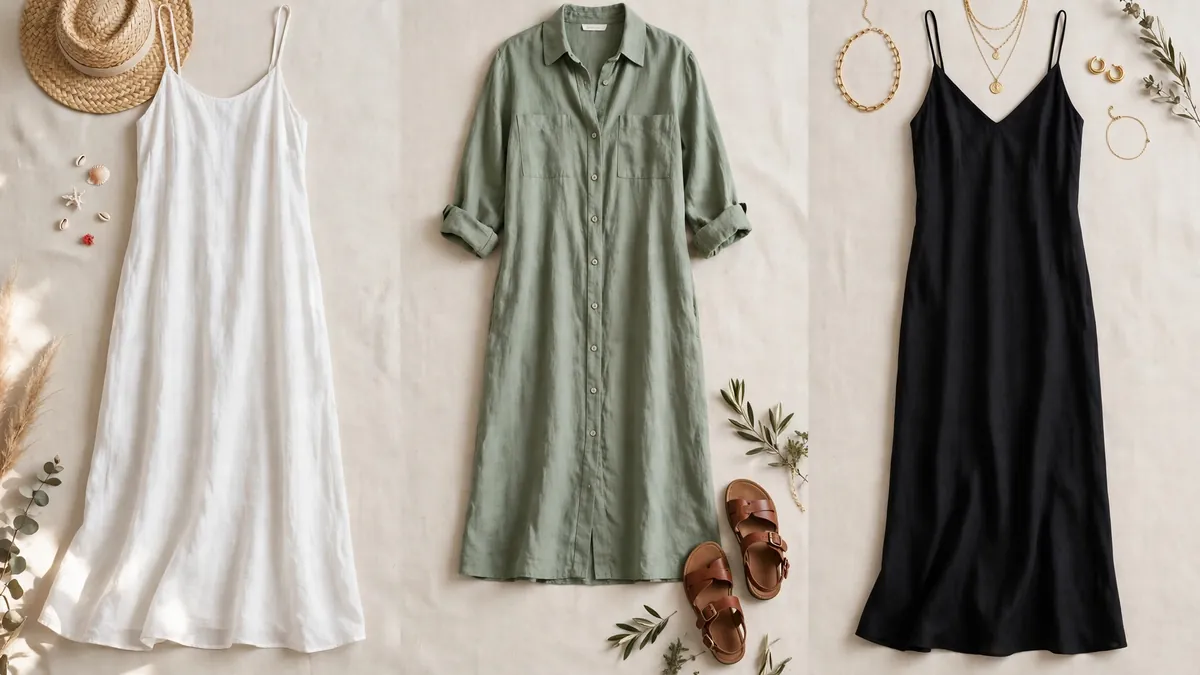
The beach dress has the hardest job and the simplest brief: it goes on over swimwear, it gets sandy, it gets damp, and it still has to look good walking back up the beach to lunch. The cuts that work are the ones with room in them — a loose shirt dress worn open or belted, a tiered maxi, or a simple slip dress that pulls on in seconds.
A midi hits the sweet spot: long enough to feel covered walking into a cafe, short enough to stay out of the sand. White is the classic beach linen, but it shows every mark and goes sheerest in sunlight — the opacity check later in this guide matters most here. Pale stone, soft sage and washed blue are more forgiving. Skip anything lined at the beach; a lining traps heat and stays damp. Flat leather sandals, a straw hat and a straw tote finish it — the simplest version of linen dresses Australia summer dressing.
The Brunch Dress
Brunch is where linen dresses earn their keep. You sit for an hour or two, eating and talking, in a cafe that might be air-conditioned or a sunlit courtyard — and the dress has to be comfortable seated and polished enough for the walk there. The midi shirt dress is the natural choice: a collar and buttons give it structure, the waist can be defined with a belt, and the length is modest without feeling matronly.
Puff or short sleeves suit brunch better than a sleeveless cut, which can feel too close to swimwear in a cafe. A soft print — a small check, a stripe, a faded floral — reads relaxed here in a way it would not at work. Stick to the middle of the palette: stone, sage, soft blue, pale terracotta.
The Evening Dress
Evening is where linen surprises people. A well-cut linen dress in the right colour reads as relaxed luxury rather than beachwear — the key is that everything else about the dress has to step up. The cuts that work have a sense of line: a bias-cut slip maxi that skims rather than clings, a column dress with a clean neckline, or a shirt dress in a dark colour with the collar worn up.
Colour does the heavy lifting after dark. Black linen reads evening instantly, hides wrinkles better than any pale shade, and takes jewellery well; navy and deep olive work the same way. A linen-silk blend is worth seeking out: it keeps linen’s breathability but adds a subtle sheen and a smoother drape, and it wrinkles less under restaurant lights. A block heel and gold or pearl jewellery do the rest.
The Work Dress
Linen at work is a narrower brief, and it works best when the dress behaves like tailoring rather than resort wear. The shirt dress is again the answer, but a different version from the brunch one: knee-length or midi, with sleeves — short at minimum, three-quarter better — a defined waist, and a collar that frames the neckline.
Colour should be the darker end of the palette: navy, charcoal, black, deep olive, or a muted pinstripe. Weight matters here more than anywhere: a denser linen holds a shirt-dress shape through a full day of sitting, while a light, floaty weave creases badly at the waist by mid-afternoon. A shirt dress with a defined waist and collar shows creases as texture; a loose, unstructured dress will look slept-in by lunch.
Lengths, Weights and Colours: Matching the Dress to the Day
Once the occasion is set, the details fall into a simple pattern. Minis belong to the beach and casual daytime — as cover-ups, or with flat sandals on a hot afternoon. Midis are the most versatile length in linen: they work for brunch, work and evening, and they are the length to choose if you are buying one dress to do the most jobs.
Weight follows the same logic. A light, open weave is for the beach and the hottest afternoons — it dries fast and feels like almost nothing on. A mid-weight linen is the everyday choice for brunch, with enough body to drape properly. A heavier linen, or a blend with more structure, is for work and evening, where the dress needs to hold a line. Colour is the quickest way to change a dress’s occasion: white, stone and pale pastels read daytime; mid-tones read brunch; dark colours read evening and work.
The Opacity and Lining Check
The single most useful thing you can do before buying a linen dress is the sunlight test. Hold the fabric up to a window or step into direct sun with it on — linen that looks opaque under shop lighting can go surprisingly sheer in Australian sun, especially in white, stone and pale pastels. If you can see the outline of your hand through the fabric, you will be able to see more than that in daylight.
Lining is the honest answer to a sheer dress. A lined linen dress is more opaque and drapes more smoothly, but it is also warmer and slower to dry — which is why lining suits brunch, evening and work better than the beach. A slip underneath is the flexible alternative: opacity on the days you want it, nothing extra on the hottest days. Nude underwear matters under pale linen — white underwear under a white linen dress is more visible than nude. Linen has very little stretch, so buy the size that fits your widest point.
Styling Each Occasion
Shoes set the occasion as surely as the dress does. Flat leather sandals and espadrilles keep a linen dress daytime; a block heel or strappy sandal takes the same dress to dinner. Trainers work only in the most casual settings, and for work a loafer or low closed-toe heel is the safe choice. Bags follow the same rule: straw and canvas for the beach, a small crossbody or structured tote for brunch and work, a clutch for the evening. Jewellery should be simple — the fabric is the statement. Gold sits well against linen in every colour, and pearls suit an evening linen dress.
Linen Dresses Australia Summer: Care That Keeps Them Looking Good
Linen dresses last for years when washed properly, and the care is simpler than the fabric’s reputation suggests. Wash in cold water on a gentle cycle with a mild detergent, and skip fabric softener — it coats the fibres and dulls linen’s breathability.
Dry in the shade — Australian sun fades dark linen fast, and black linen left in direct sun will show it within a season. Lay a heavy maxi flat or drape it over a rack rather than hanging it by its straps, because a wet linen maxi is heavy and will stretch out of shape. For wrinkles, steam rather than iron: five minutes with a handheld steamer leaves the fabric looking relaxed rather than pressed flat, which is the right finish for linen.
Where to Find Each Style
You do not need to hunt far for good linen dresses in Australia — most of the labels that do minimalist fashion well here carry them every summer. For the beach and brunch end, Assembly Label and Deiji Studios are good starting points for easy, relaxed cuts, and Country Road reliably stocks a well-cut linen shirt dress each season. Dissh is worth a look for midi lengths with a bit more polish.
At the more considered end, St Agni and Matteau both make linen dresses cut to last — slip maxis and shirt dresses in restrained colours that work for evening as well as daytime. For the evening specifically, Zimmermann’s linen dresses are the designer reference point, with the bias cuts that make linen read as occasion dressing. To compare cuts across many labels in one place, THE ICONIC’s linen dress range is a practical starting point, and our roundup of the best linen clothing brands in Australia covers the labels behind the dresses in more depth.
The Mistakes That Spoil a Good Linen Dress
The most common mistake is buying the wrong occasion: a beach maxi worn to a wedding, or a structured work shirt dress worn to the beach, where it looks overdressed and feels too warm. The second is ignoring opacity — a white linen dress bought indoors and first worn in full sun is an experience most people only need once. The third is the wrong size: linen does not stretch, so a dress that is tight across the bust or hips will stay tight.
And the last mistake is expecting linen to behave like cotton: it will wrinkle, it will soften, and it will look different at 4pm than it did at 9am. Choose by occasion, check the opacity in sunlight, buy the size that fits your widest point, and let the wrinkles be. A small rotation — beach, brunch, evening, and work if you need it — will carry an Australian summer further than a wardrobe of dresses bought for no particular day at all. For the wider summer picture, our Australian summer fashion guide covers the rest of the season’s wardrobe, and the Australian resort wear guide is the companion read if the beach end is where your summer mostly happens.
FAQs
Are linen dresses good for Australian summer?
Yes — linen is one of the best fabrics for an Australian summer. It breathes well in heat and humidity and dries quickly after swimming or sweating. The key is choosing the right cut and weight for the occasion: a light, loose dress for the beach, and a denser, more structured cut for work or evening.
What length linen dress is best for summer in Australia?
A midi is the most versatile length — it works for brunch, work and evening. A mini suits the beach as a cover-up or for casual daytime, while a maxi is best for the evening or a long beachside lunch, where its length is an asset.
Do white linen dresses go see-through?
They can, especially in strong Australian sunlight. Always hold the fabric up to a window or step into direct sun before buying — if you can see your hand through it, it will be sheer in daylight. A lining or a nude slip underneath solves the problem, and nude underwear shows less under white linen than white underwear does.
Can you wear a linen dress to a wedding or evening event?
Yes, if the cut and colour are right. A bias-cut slip maxi or a column dress in black, navy or deep olive reads as evening dressing. A loose beach-style linen dress in a pale colour does not work for a formal evening, so the occasion and the silhouette have to match.
How do you stop a linen dress from wrinkling?
You cannot stop linen wrinkling entirely — it is the nature of the fibre — but you can keep it looking good. Choose a denser weave or a linen blend for occasions where creasing matters, steam the dress rather than ironing it flat. A shirt dress with a defined waist and collar shows creases far less than a loose, unstructured cut.