
Best Hats for the Australian Sun 2026
The best hats for sun protection Australia 2026 has to offer aren’t a fashion choice — they’re essential equipment. The Australian sun is among the harshest in the world, and a proper hat shades your face, ears and neck in a way sunscreen alone can’t match (sunscreen sweats off; a brim doesn’t). Whether you’re after an iconic Akubra, a packable travel hat or something for the school run, this guide covers what actually protects you, which Australian brands do it best, and how to find a hat you’ll wear every day.
What Makes a Hat Genuinely Sun-Safe
Not all hats protect equally. A fashion cap shades your forehead and leaves your ears, nose and neck fully exposed — better than nothing, but not sun-safe. Here’s what to look for:
- Brim width: at least 7.5cm all the way around is the benchmark for real protection. The wider the brim, the more of your face, ears and neck stay shaded as the sun moves.
- UPF 50+ rating: the fabric itself should block UV. Quality fur felt, dense canvas and tightly woven straw all rate well; thin, loosely woven fabrics let UV through.
- Coverage: the hat should shade the face, nose, ears and back of the neck. This is why wide-brim and legionnaire styles outperform caps for protection.
- Fit: a hat that blows off in the first sea breeze is a hat you won’t wear. Look for adjustable inner bands, chin cords or a snug-enough fit for your activities.
Australian skin cancer specialists recommend combining a sun-safe hat with sunscreen, sunglasses and shade — the hat is one layer of a proper sun strategy, not a replacement for the rest. For a detailed breakdown of what earns a hat its sun-safe credentials, MoleMap’s guide to UPF 50+ hats is an excellent reference from clinicians who check skin for a living.
The Akubra: Australia’s Icon
No discussion of the best hats for sun protection in Australia starts anywhere but Akubra. Handcrafted in Kempsey, New South Wales, from rabbit fur felt, Akubras have been the definitive Australian hat for well over a century — worn by drovers and stockmen, the armed forces, Olympians and prime ministers. The fur felt construction gives them a UPF 50+ rating, genuine water resistance and a lifespan measured in decades; these are hats that get passed down, stained with red dust and all.
The range is broader than the bush stereotype suggests:
- The Cattleman: the icon — wide brim dipping front and back, teardrop crease, the silhouette most of the world pictures when it thinks “Australian hat”. Maximum sun protection in the classic package.
- The Territory: an even wider brim for those who want the most shade possible — the pick for serious outdoor work.
- The Traveller: designed to be packed and crushed without losing its shape; the Akubra for people who actually travel.
- The Hampton: the narrowest brim in the range — a city hat that keeps the Akubra character without the outback footprint.
An Akubra is an investment — expect to pay a few hundred dollars — but divided over twenty years of wear, it’s one of the cheapest hats you’ll ever own. Buy from a proper hatter who’ll measure your head and shape the brim; a fitted Akubra feels like it was made for you, because essentially it was.
Barmah Hats: Melbourne-Made Leather
For something tougher than felt, Barmah Hats handcrafts hats in Melbourne from kangaroo and buffalo leather. Kangaroo leather is remarkably strong for its weight, which makes Barmah hats durable without being heavy — and many styles fold or crush for travel, springing back into shape afterwards.
The leather look sits somewhere between outback and biker: the Vintage Kangaroo Leather Hat with its braided band is the signature, equally at home on a farm bike or at an outdoor festival. Leather hats handle rain better than almost anything, age beautifully, and suit men who find felt hats a bit formal. Like Akubra, Barmah is a buy-once proposition — a well-kept leather hat lasts for decades.
Everyday Sun Hats: The Best Hats for Sun Protection Australia Has to Offer
Not every day calls for an Akubra. For the school run, the garden, the sidelines of junior sport and the daily walk, you want something light, affordable and replaceable:
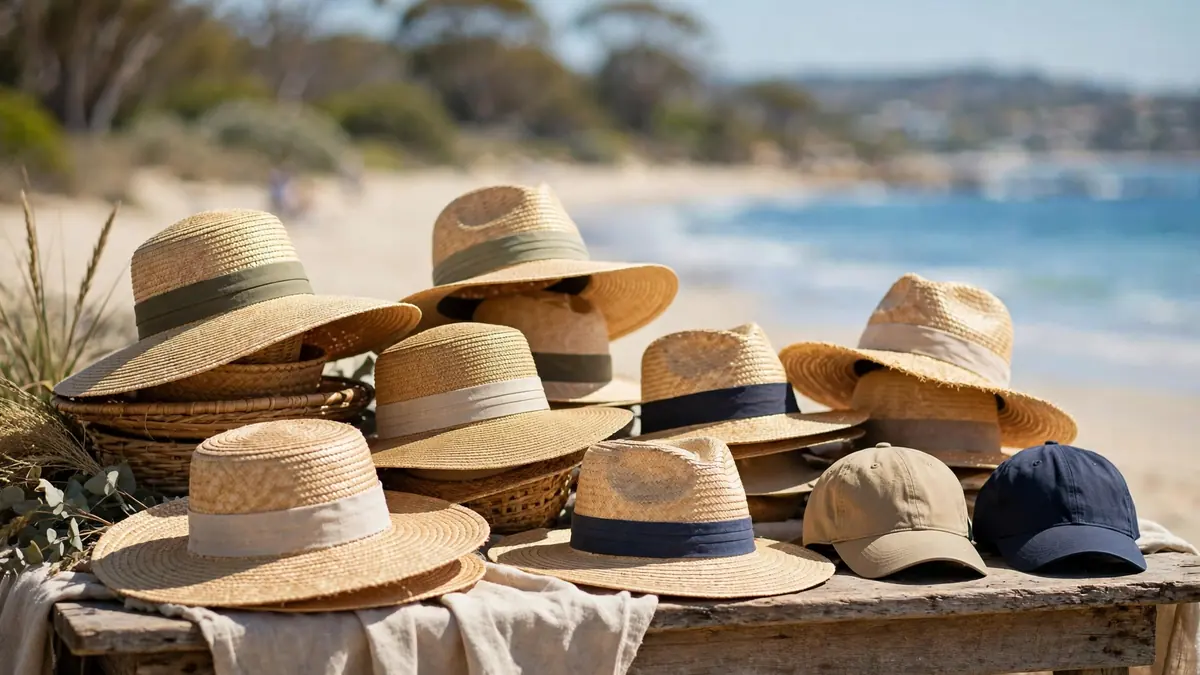
- Wide-brim straw hats: the classic summer hat — cool, light and breathable. Look for a tight weave (hold it to the light; if you can see through it easily, so can the sun) and a brim of 7.5cm or more. Replace when the weave loosens.
- Bucket hats: back in fashion and genuinely practical, with all-round coverage in a packable shape. A canvas or cotton-twill bucket in a neutral colour goes with everything casual.
- Safari and surf hats: wide brims with chin cords, designed to stay on in wind and water. Kooringal, the long-running Australian hat brand, is a staple here — its wide-brim and surf styles are sold across the country and built specifically for Australian conditions.
- Canvas field hats: the middle ground between a bush hat and a bucket — structured, washable, tough. Ideal for gardening, hiking and travel.
The rule for everyday hats: buy one you won’t cry over losing, and keep a better one for occasions. A $30 bucket hat that lives in the car will protect you more than a $300 Akubra that lives in the wardrobe.
Hats for Sport and the Water: Best Hats for Sun Protection Australia 2026
Active days need hats that stay put. A standard cap will do for a quick run, but for cricket, golf, sailing or surf lifesaving, step up to something designed for movement:
- Chin cords and straps: non-negotiable on the water or in wind. Most surf and safari hats include them; add one to any hat you wear boating.
- Quick-dry fabrics: nylon and canvas hats that survive dunking and dry fast beat felt or straw near water.
- Legionnaire hats: the cap-plus-neck-flap style issued to Aussie schoolkids for good reason — full neck coverage with a sporty feel. Uncool? Perhaps. Effective? Completely.
- Visors: better than nothing for the eyes, useless for ears and neck. Fine for tennis, not a sun strategy on their own.
For kids, the legionnaire or a wide-brim bucket with a chin strap is the standard for a reason — children won’t reapply sunscreen reliably, but a hat they can’t easily lose does the job all day.
How to Choose Your Size and Shape
A hat that doesn’t fit won’t get worn, so sizing matters more here than with almost any other accessory.
Measure properly. Wrap a tape measure around your head just above the ears and eyebrows — where the hat will sit. Hold it firm but not tight, and take the measurement in centimetres. Most quality hats are sized in cm; between sizes, size up slightly (a hat that’s a touch loose can be padded with sizing tape; a tight one just gives you a headache).
Match the brim to your build. Broader shoulders and taller frames carry wider brims; smaller builds suit moderate brims. Very wide brims on slight frames can look costume-like — the Territory is a magnificent hat, but try it on honestly.
Consider your face shape. Rounder faces suit hats with height in the crown and a brim with some angle; longer faces suit lower crowns and wider brims that add width. These are guidelines, not laws — the hat you love and wear beats the theoretically perfect one.
Try before you buy for investment hats. For an Akubra or Barmah, visit a hatter. They’ll measure you, let you try shapes, and steam-shape the brim to suit your face. It’s part of the experience and the reason these hats fit like nothing off a department store shelf.
Caring for Your Hat
A good hat lasts decades with basic care. Store it upside down on its crown (not on its brim, which warps the shape) or on a hook. Brush felt hats with a soft brush to remove dust, and wipe leather hats down after heavy rain or sweat. Let wet hats dry naturally away from direct heat — never on a radiator or in a hot car. Leather hats benefit from an occasional condition; straw hats just need replacing when the weave gives out. And never leave any hat on the dashboard in an Australian summer — the heat will cook the shape out of it.
Straw vs Felt vs Leather: Choosing Your Material
The three classic hat materials each suit different lives:
- Fur felt (Akubra): the all-rounder. Excellent UV blocking, water-resistant, holds its shape for decades, and looks smarter than the alternatives. The trade-off is warmth — felt is a winter-weight material, so it’s less comfortable on 40-degree days — and price.
- Straw: the summer specialist. Light, breathable and cool, at its best in natural or light colours that reflect heat. The trade-off is durability: straw cracks, the weave loosens with UV exposure, and it’s not a rain hat. Treat straw hats as seasonal — buy well, replace every few summers.
- Leather (Barmah): the tough option. Handles rain, knocks and being sat on better than anything else, and develops character with age. The trade-off is weight and warmth — leather hats are heavier than felt and can be hot in peak summer — but for farm, travel and festival life they’re hard to beat.
- Canvas and nylon: the practical pick for sport, gardening and the water. Washable, crushable, quick-drying and cheap enough to replace. They’ll never look as good as felt or leather, but they’ll get worn harder than either.
Most hat people end up with at least two: a good felt or leather hat for best, and a canvas or straw hat for hard use. That’s a sensible, affordable quiver.
Wearing Hats Well: A Few Style Notes
A sun-safe hat can also look good — the two aren’t in conflict. A few guidelines:
- Wear it level. A hat pushed back on the head looks accidental; worn level, just above the ears, it looks intentional. Slight tilt is character; a big tilt is costume.
- Match formality roughly. A felt Akubra works with everything from workwear to a blazer; a surf hat with a chin cord belongs with casual clothes. The hat should sit at the same dress level as the outfit.
- Keep it clean. A sweat-stained band ruins even the best hat. Replace inner bands when they discolour, brush felt regularly, and retire straw hats when the weave goes.
- Own it. The biggest barrier to wearing a proper hat in the city is self-consciousness, and it evaporates after the first week. Australia is a hat country — nobody thinks twice.
A hat is only half the sun plan: match it with the picks in our best sunscreens in Australia guide and a daily layer from the best SPF moisturisers in Australia, then finish the outfit with the Australian summer fashion guide.
FAQs
What is the best hat for sun protection in Australia?
A wide-brim hat (7.5cm brim or more) with a UPF 50+ rating gives the best protection, shading the face, ears and neck. The Akubra Cattleman is the iconic Australian choice; Barmah’s leather hats and Kooringal’s wide-brim styles are excellent alternatives.
Are Akubra hats good for sun protection?
Yes. Akubras are made from dense rabbit fur felt with a UPF 50+ rating, and their wide brims shade the face, nose, ears and neck. Styles like the Cattleman and Territory offer outstanding protection, and they’re handcrafted in Kempsey, NSW.
What hat do Australians wear in summer?
It depends on the setting: Akubras and Barmah leather hats for the bush and outdoors, wide-brim straw hats and buckets for the beach and everyday, and surf hats with chin cords for the water. Caps are popular but offer far less protection than wide-brim styles.
How should a sun hat fit?
Measure around your head just above the ears in centimetres. The hat should sit comfortably without pinching — snug enough to stay on in a breeze, or fitted with a chin cord for wind and water. Between sizes, size up slightly.
How long does an Akubra hat last?
With basic care — brushing, proper storage, drying naturally when wet — an Akubra can last decades and is often passed down. The fur felt construction is exceptionally durable, which is why the price (a few hundred dollars) works out cheaply over its lifetime.